The Jibbon Track is a great introduction to Royal National Park and the coastal village of Bundeena.
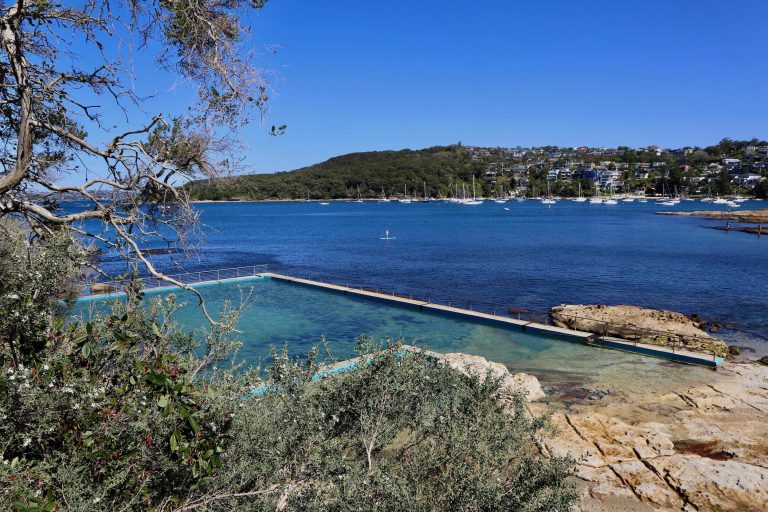
Starting and finishing at Bundeena Wharf, during this walk you’ll cross varied environments from the beach to rugged escarpments and coastal scrub. You’ll enjoy views across Port Hacking and the ocean beyond.
You’ll also have an opportunity to see Aboriginal rock engravings on the Jibbon Track, an enduring reminder of the Dharawal people and their connection to this land.
| Distance: | 7.4km |
| Start: | Bundeena Wharf |
| End: | Bundeena Wharf |
| Public Transport: | Train to Cronulla, transfer to ferry between Cronulla and Bundeena |
| Water: | Bundeena Reserve (near the ferry wharf) Entrance to Royal National Park (near Beachcomber Ave) |
| Toilets: | Bundeena Reserve (near the ferry wharf) Entrance to Royal National Park (near Beachcomber Ave) |
| Top Tip: | If you didn’t pack a picnic to enjoy along the way, consider stopping into Bundeena CSC. You’ll pass it on Loftus St as you make your way to the ferry wharf, and the bistro enjoys scenic views across Port Hacking. |
Jibbon Track Overview
The Jibbon Track is a loop walk at the Bundeena end of Royal National Park. The walk starts and ends at Bundeena Wharf.
How to get to Bundeena
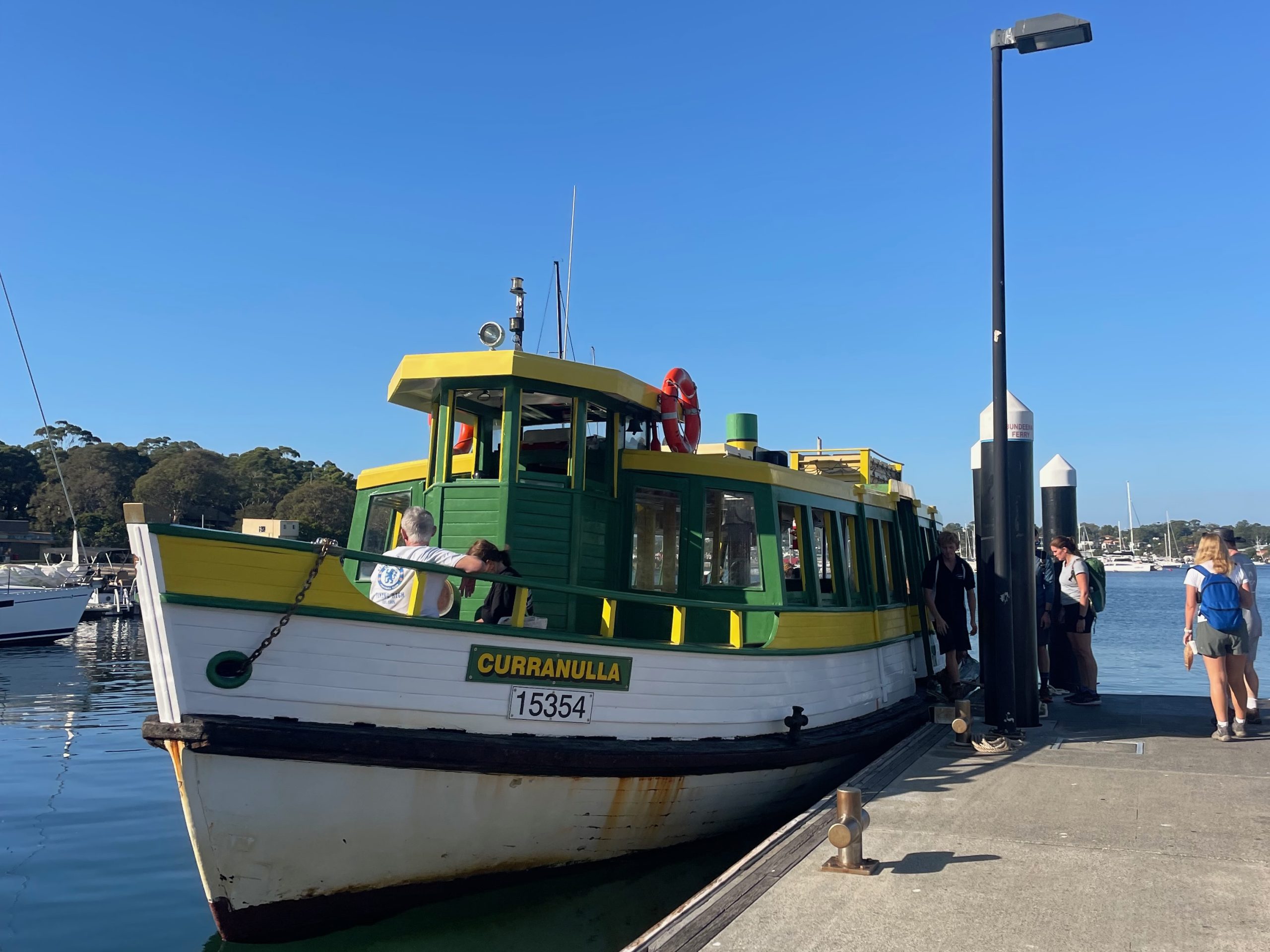
If you’re travelling from central Sydney, or any of Sydney’s suburbs on the other side of Port Hacking, you can get to Bundeena via Cronulla on a small ferry.
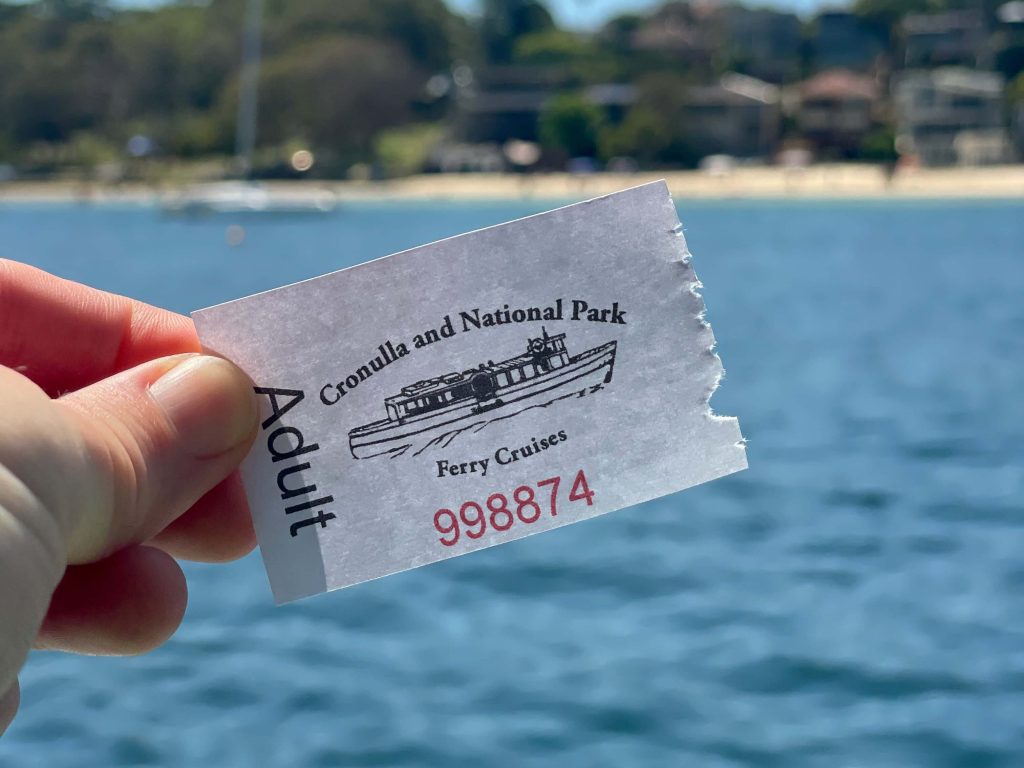
The wharf at Cronulla is located a few minutes’ walk from the train station, and the ferry across to Bundeena is hourly (see the timetable here). The ferry costs $9.40 each way, and payment can be made by Eftpos or credit card on the ferry. The Cronulla to Bundeena ferry is not part of the Opal network.
Jibbon Track walking route
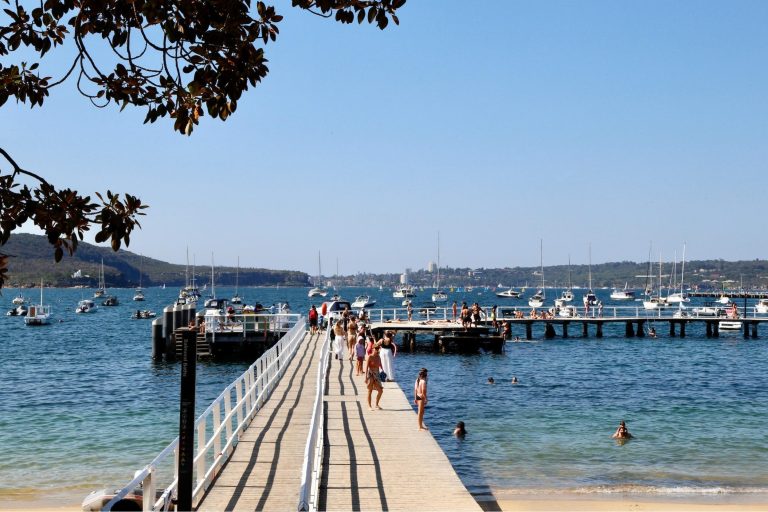
After arriving at Bundeena Wharf, you have two options, you can walk straight ahead up Brighton St, taking the first left into Loftus St…. or you can cut through Bundeena Reserve by taking the steps (on your left as you begin walking from the wharf toward town) into the bush.
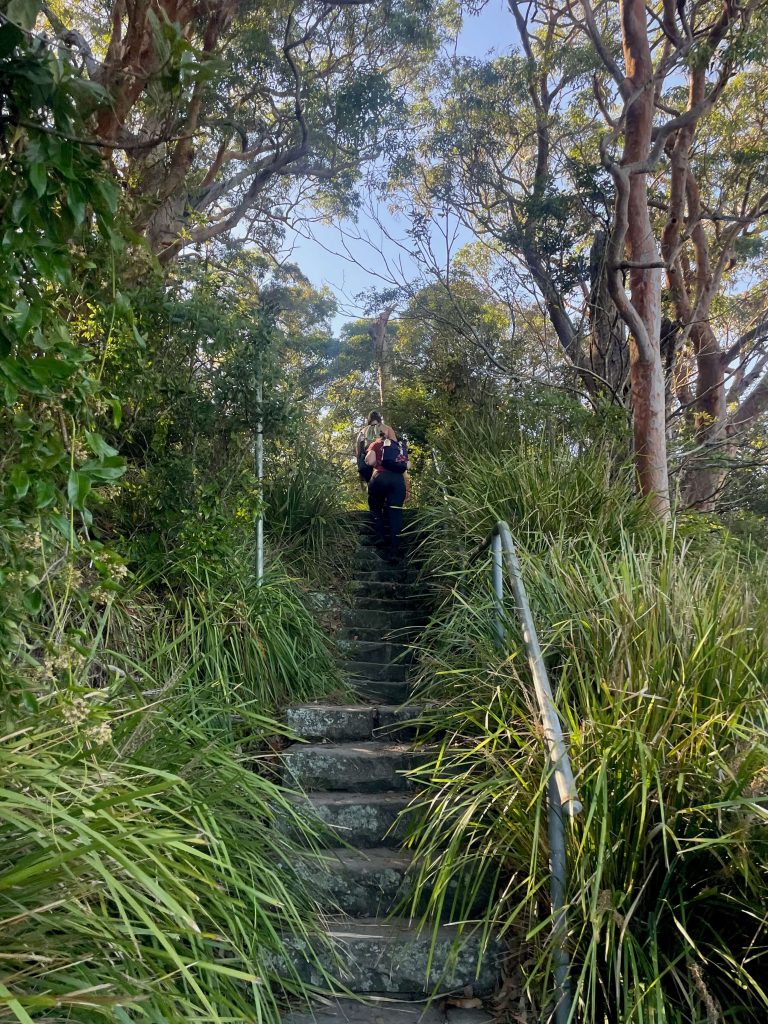
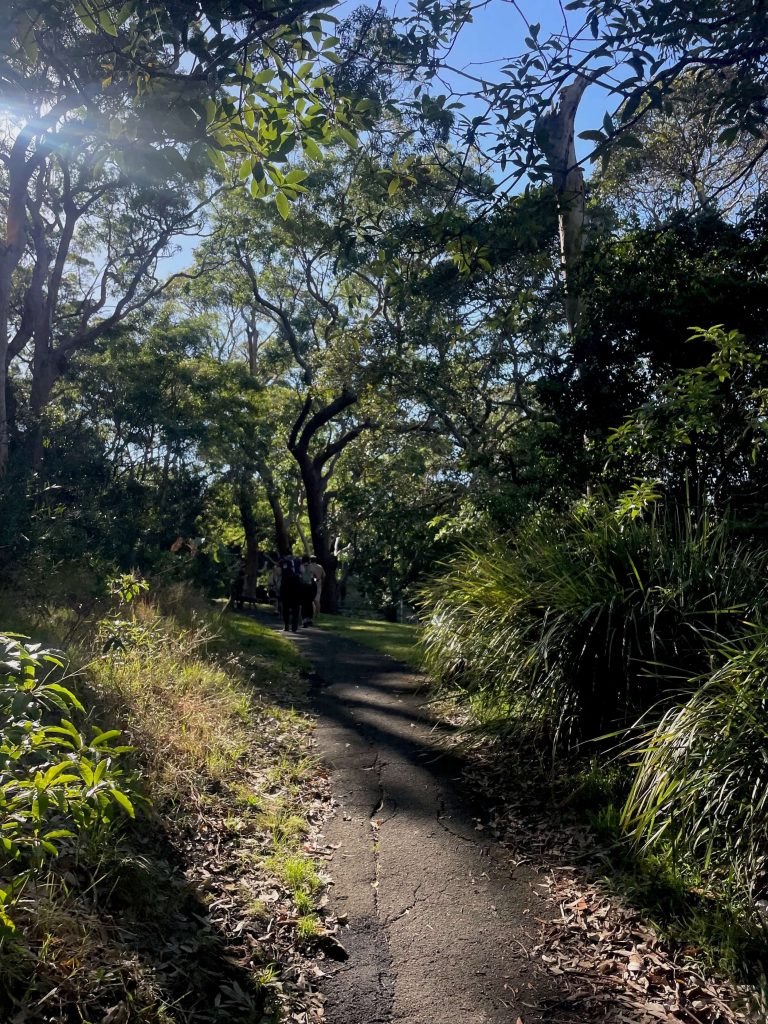
The route through Bundeena Reserve passes in front of Bundeena CSC before coming to The Avenue. As you walk along The Avenue, it becomes The Lambeth Walk and then Neil St. At the point where Neil St meets Loftus St you’ll see signs marking the entry point to Jibbon Beach.
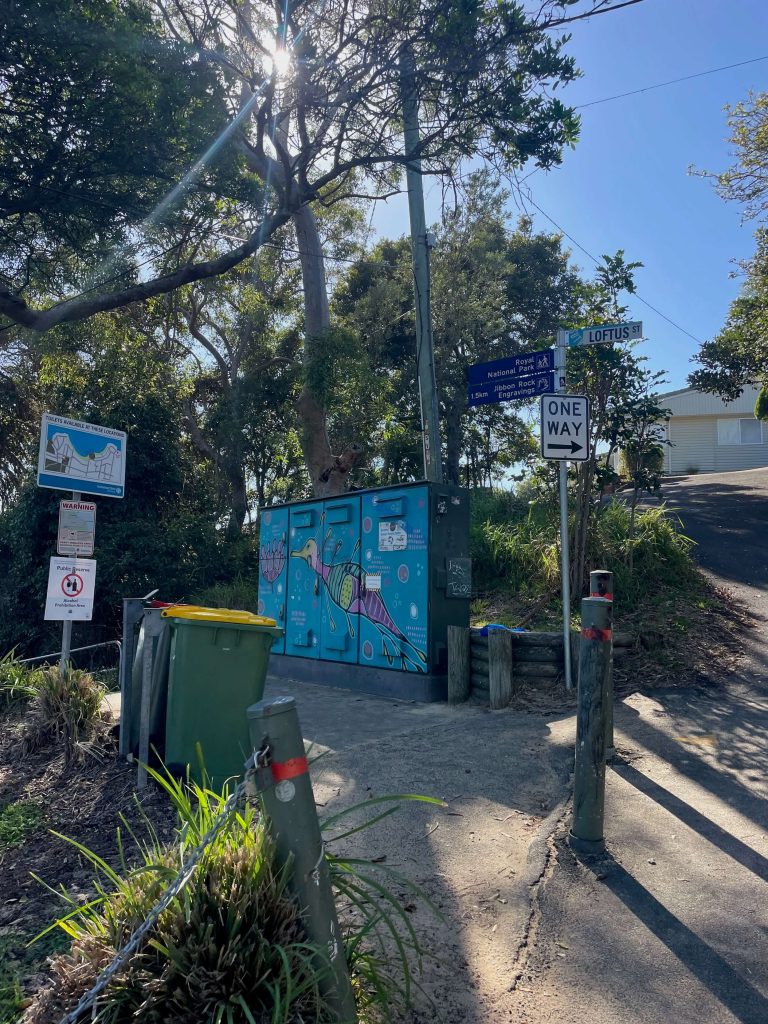
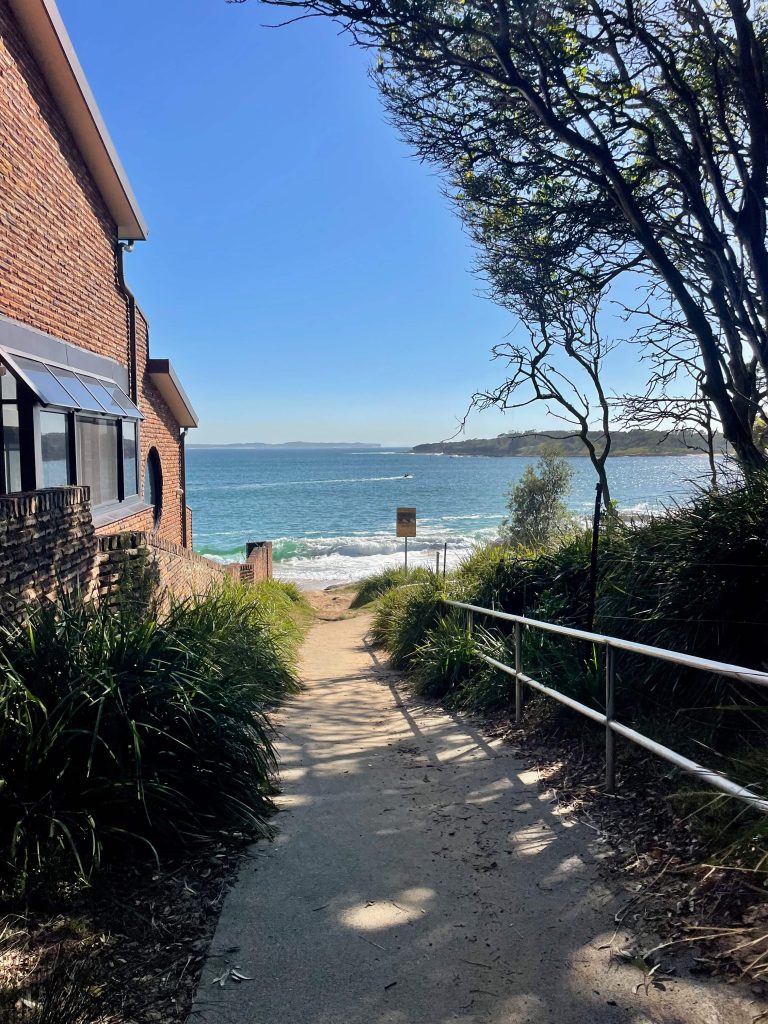
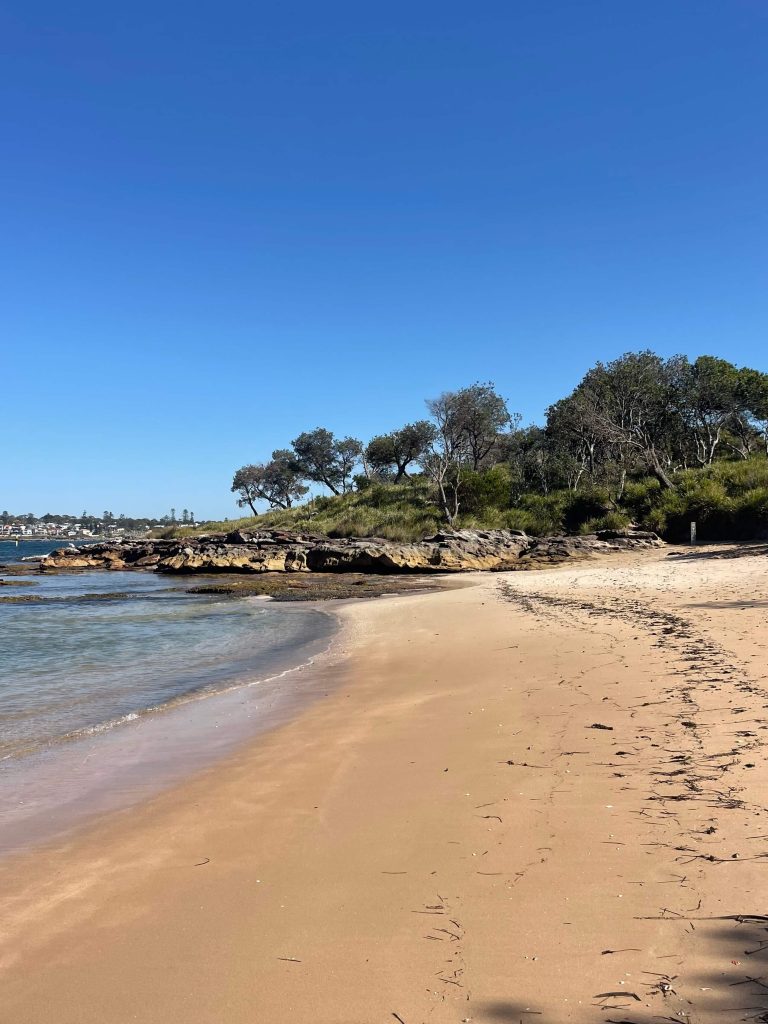
The walk heads straight along the length of Jibbon Beach. At the end of the beach a sign marks the route up the rocks.
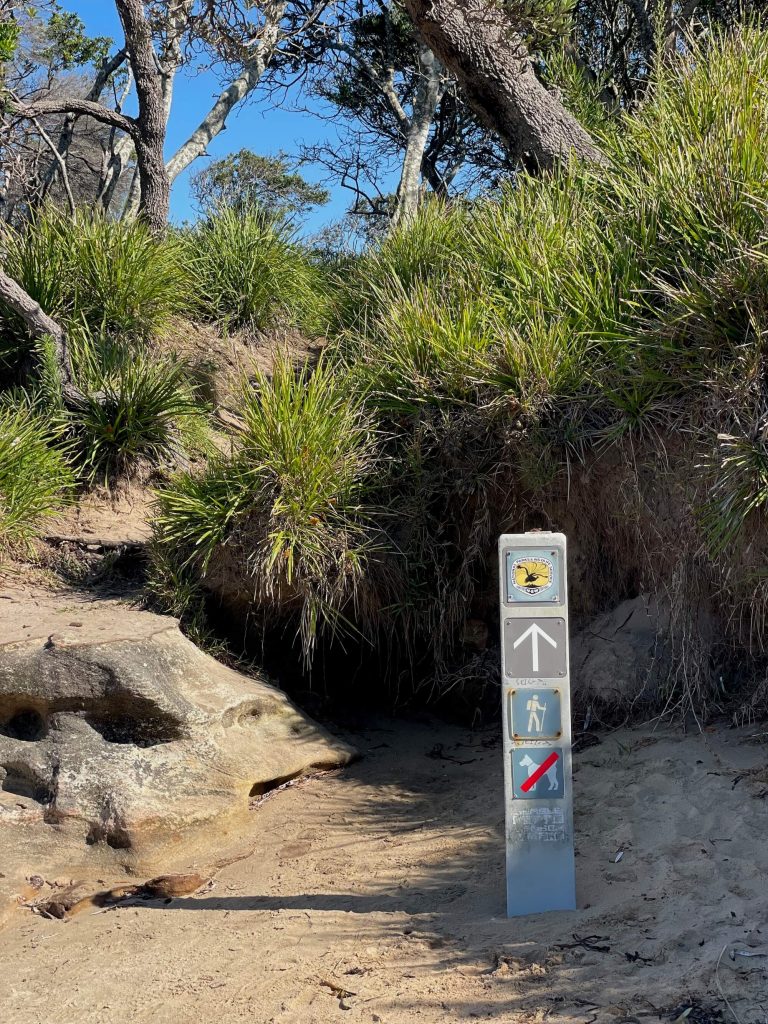
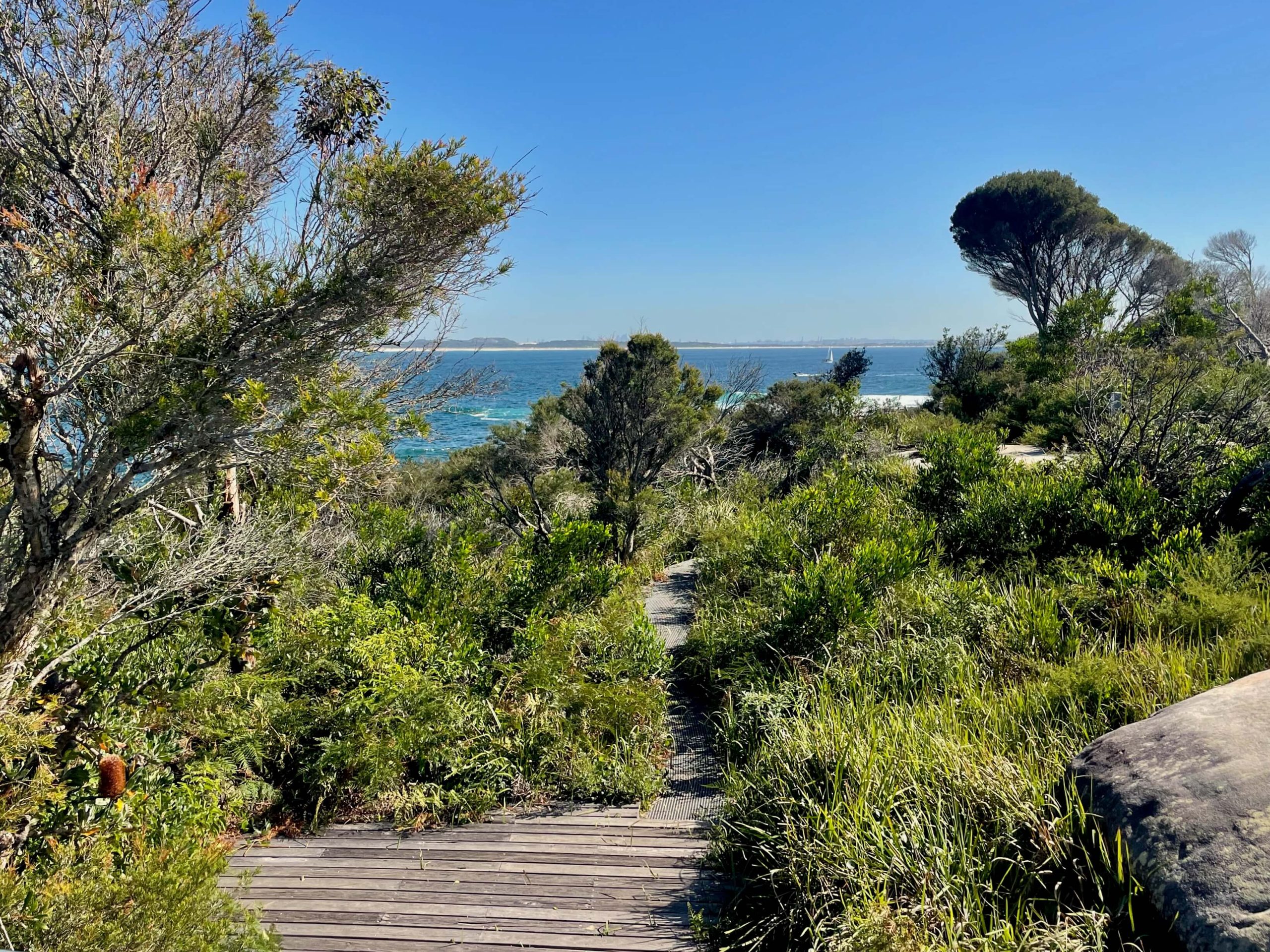
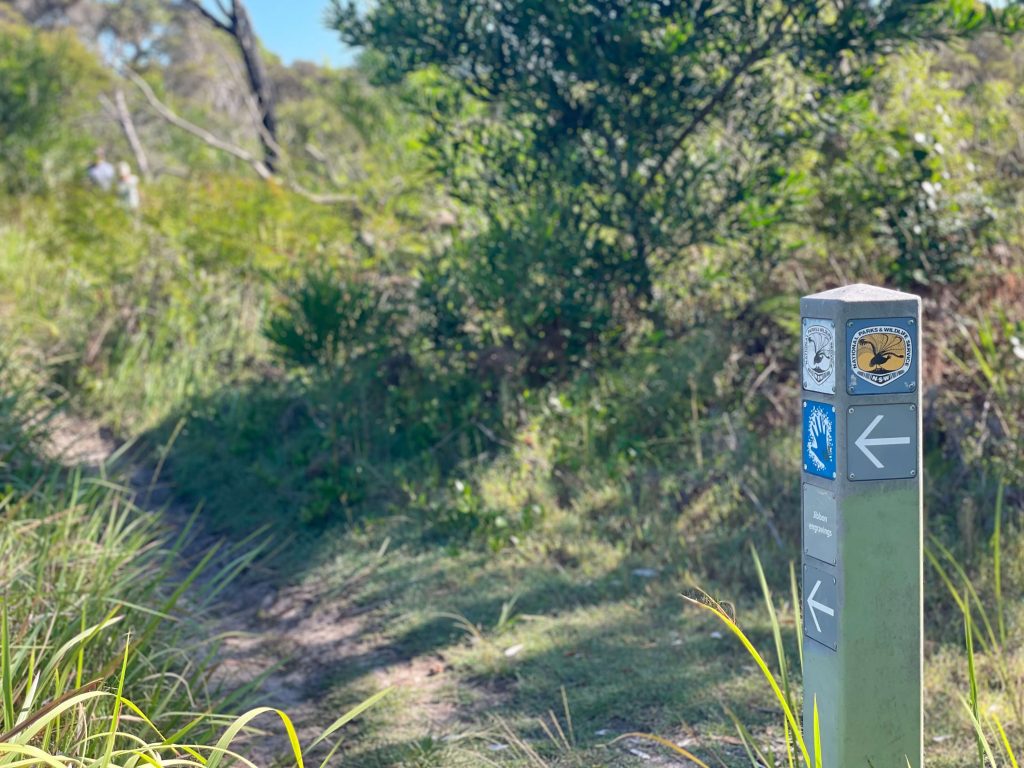
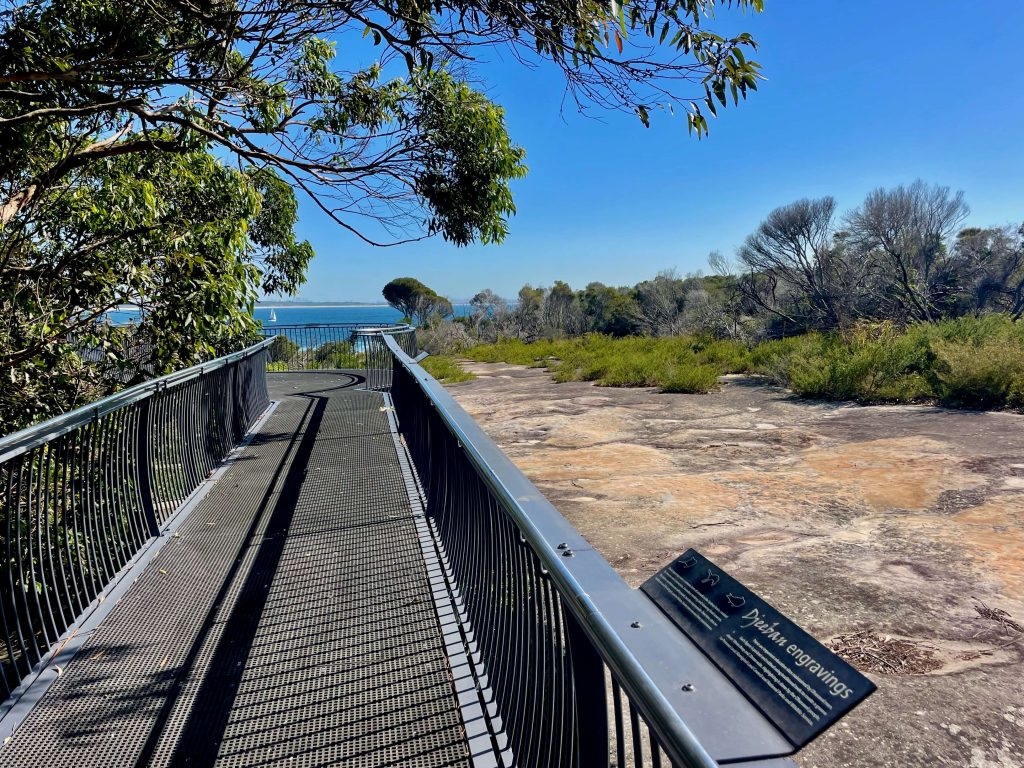
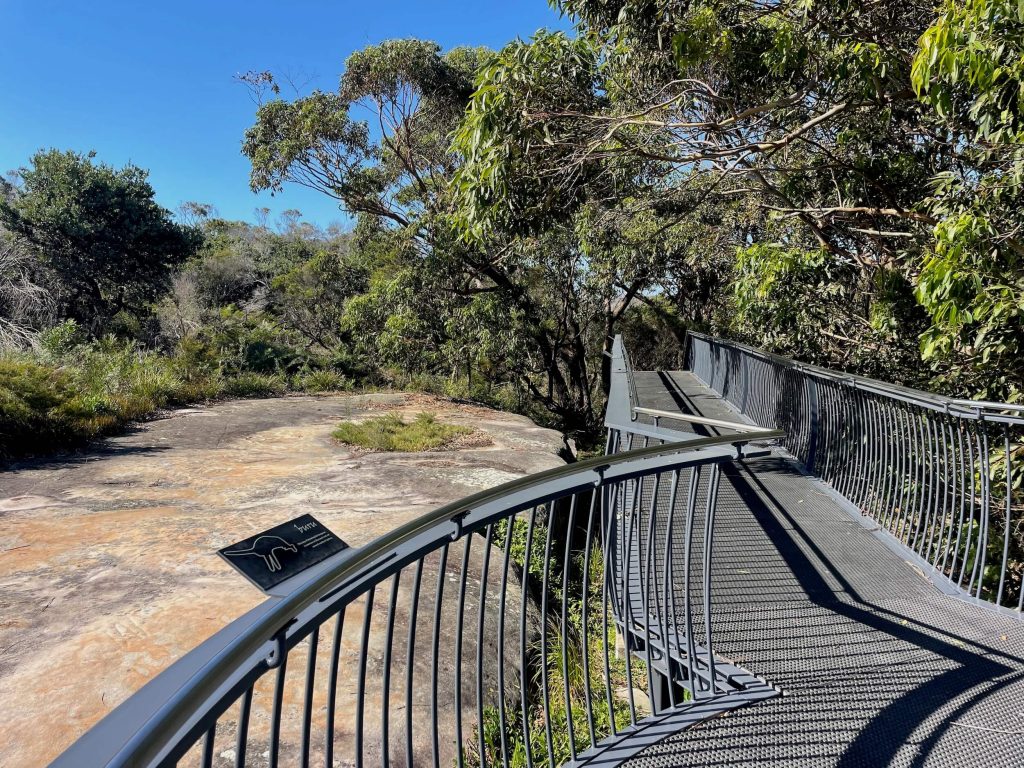
The track follows the coast on the headland passing Aboriginal rock engravings that you can observe from the raised boardwalk and viewing platform.
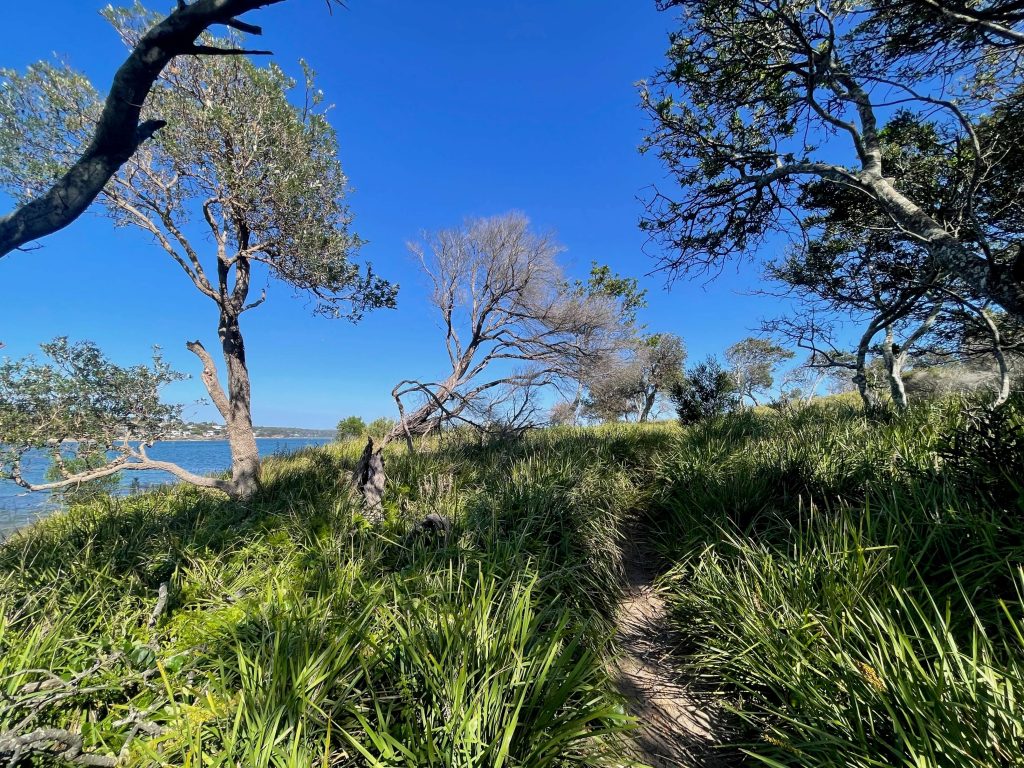
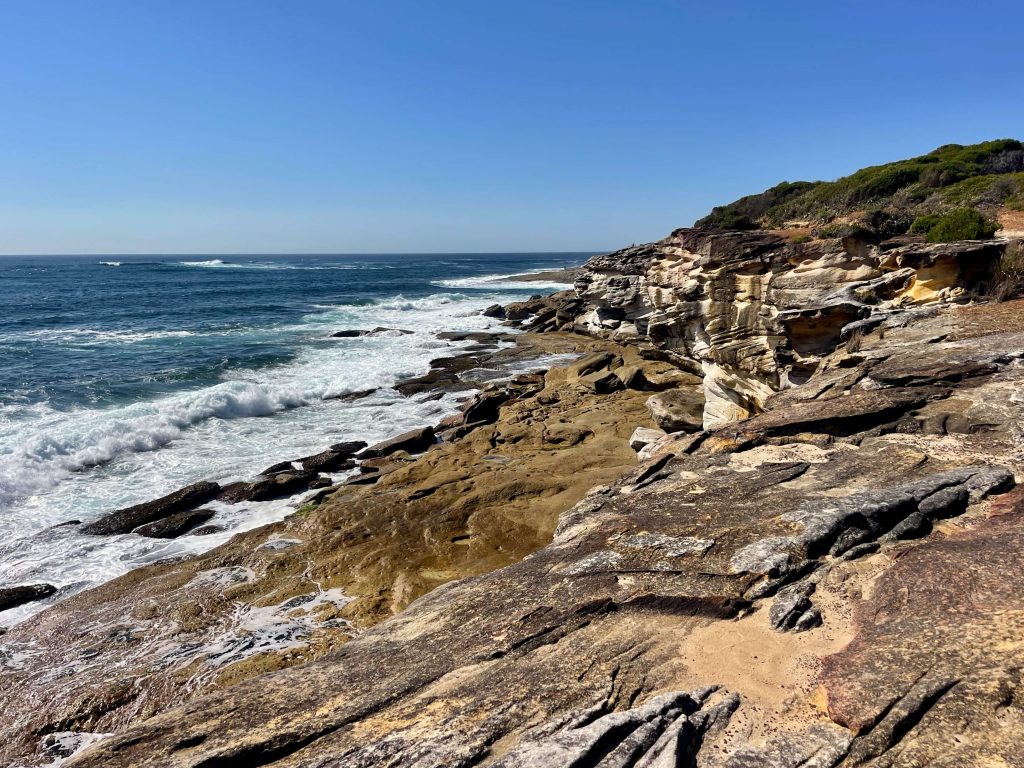
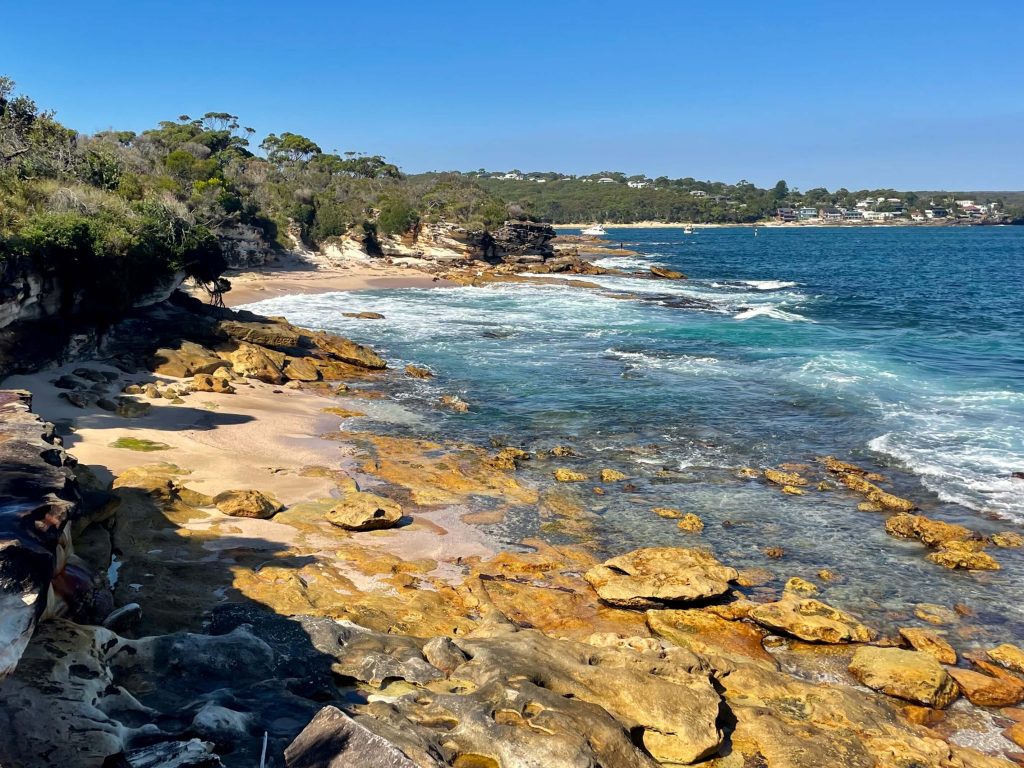
The walk continues along the coast on the escarpment above Little Jibbon Beach before reaching Port Hacking Point.
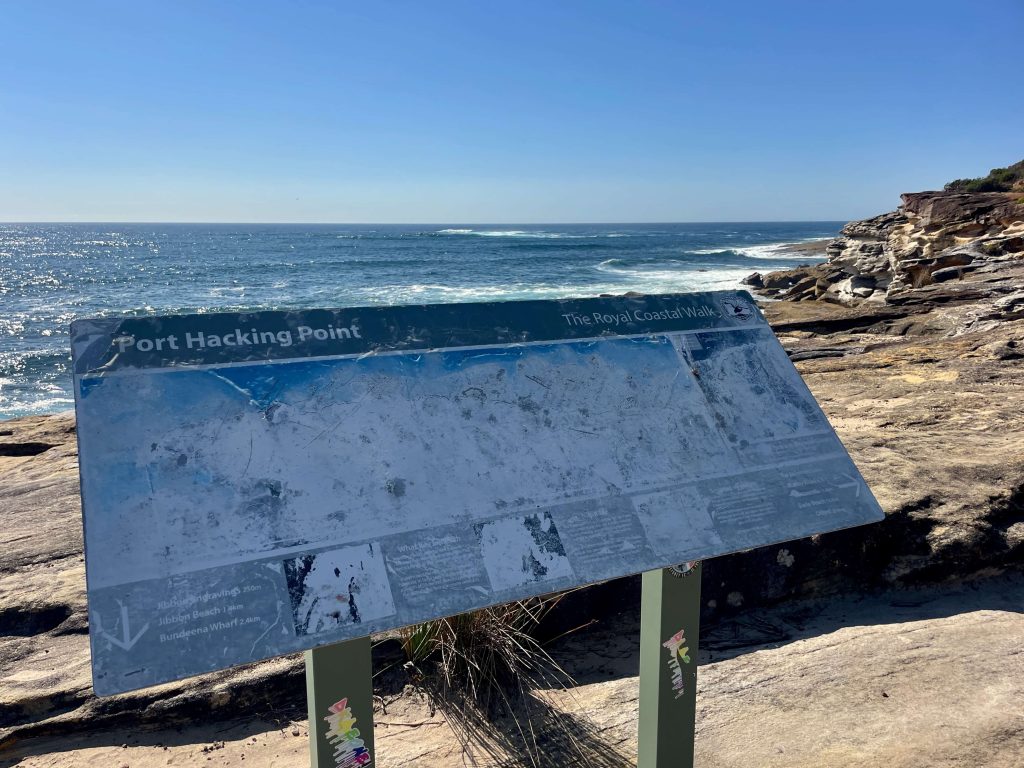
A faded Royal National Park signpost at Port Hacking Point notes the distance from key points along The Coast Track (3.5km to the Balconies … 11.6km to Wattamolla … 29.6km to Otford).
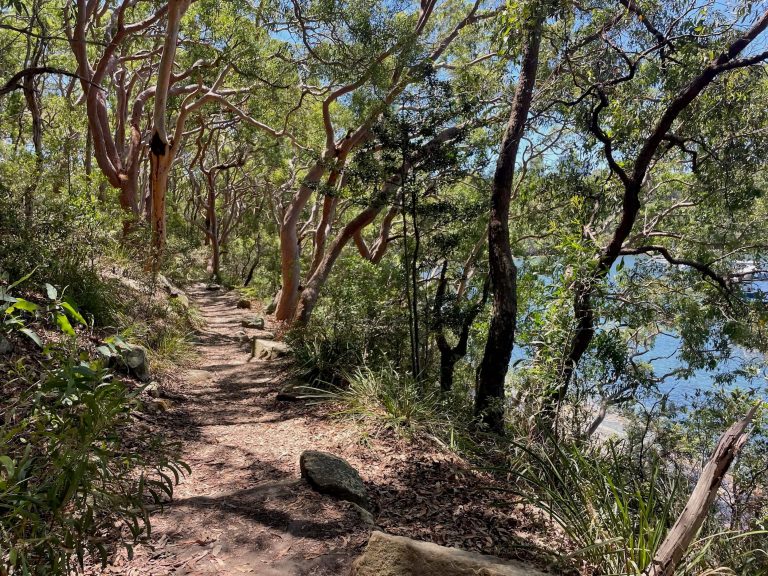
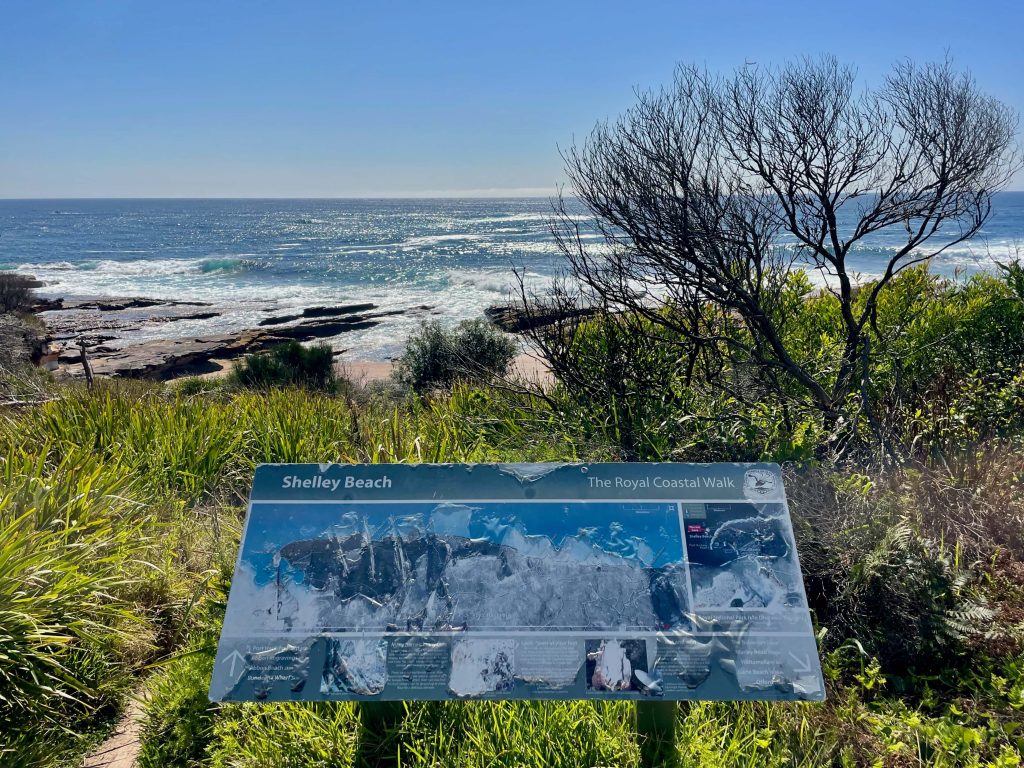
From Port Hacking Point the walk tracks along the escarpment through to Shelley Beach. As you head up the track away from the beach, the tracks splits into two directions.
One direction is the Jibbon Loop Track which connects back with Jibbon Beach where you can return the way you came.
However the route described in this guide follows the other direction on the similarly named Jibbon Track. It forms a larger loop walk which at first tracks parallel to the coastline before veering inland to comes out of the bush where most people start their walk on The Coast Track (at the end of Beachcomber Ave).
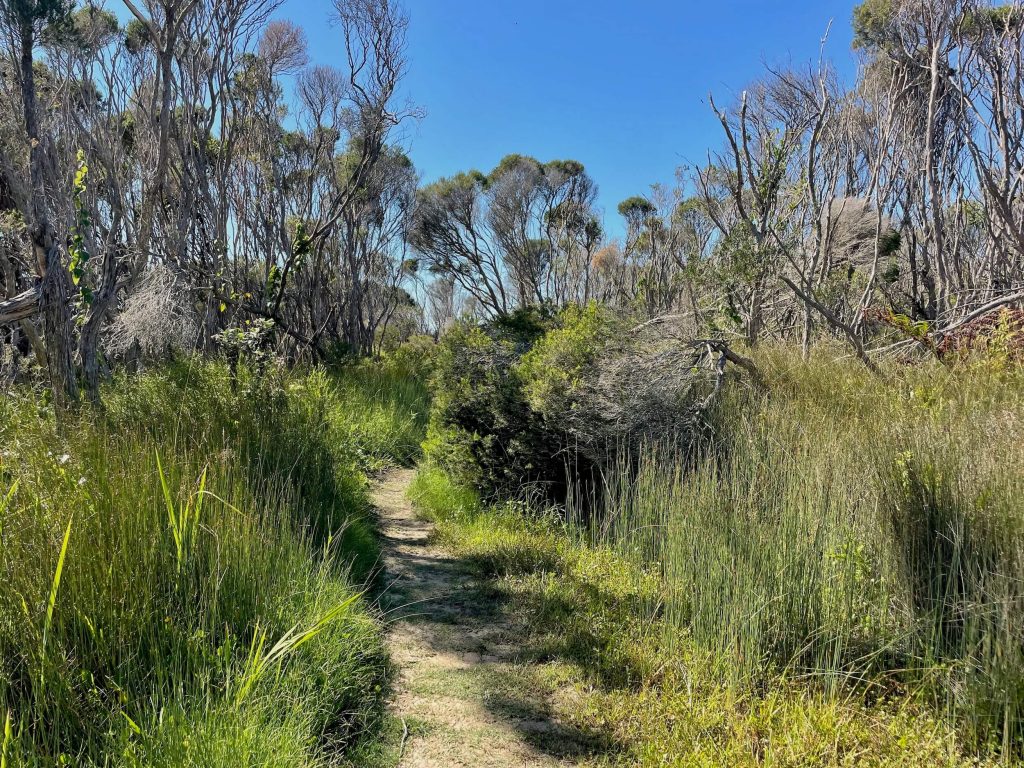
Once the Jibbon Track route heads inland, you’ll be on a sandy, exposed track that has a slight incline as it tracks up toward Bundeena.
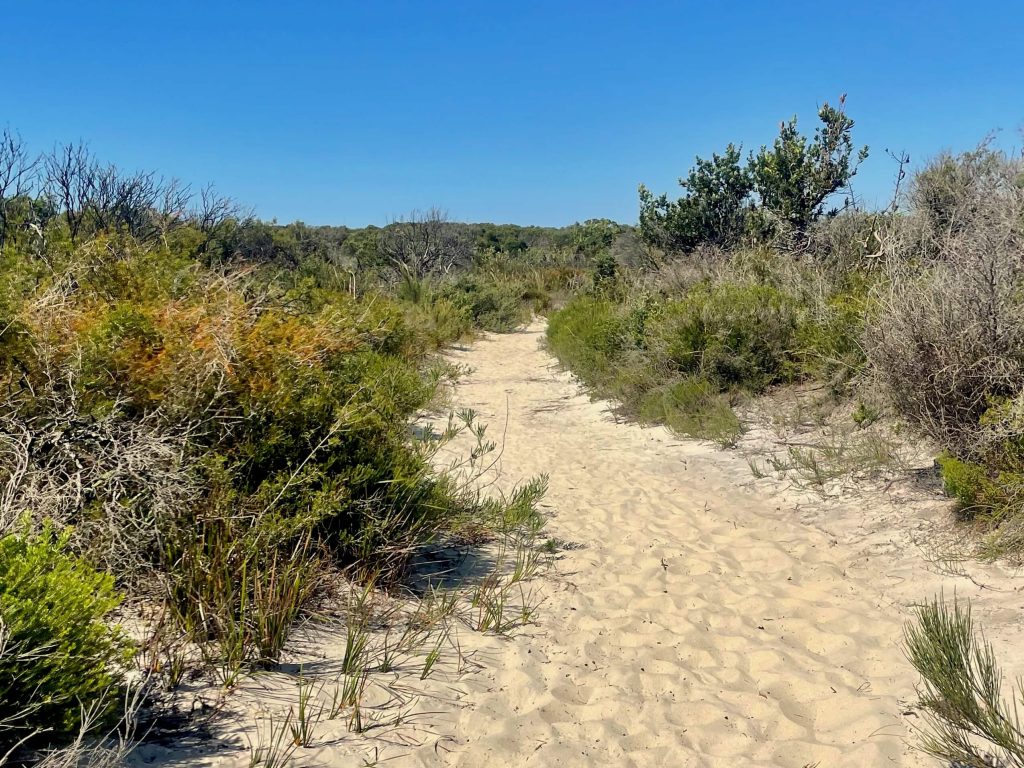
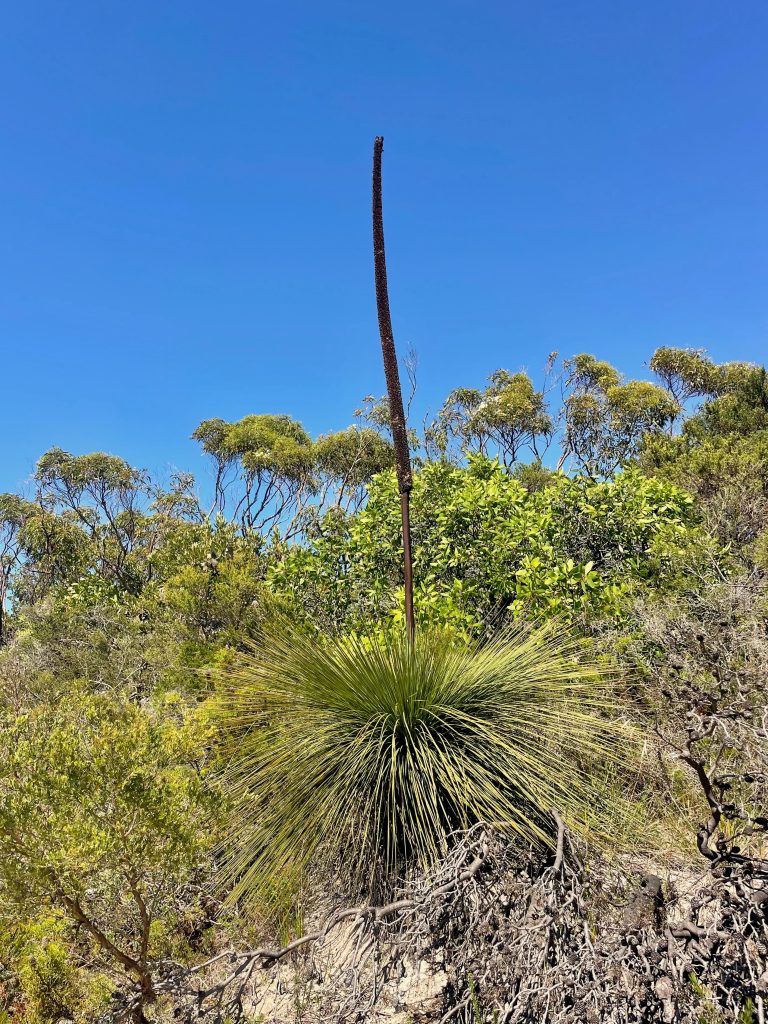
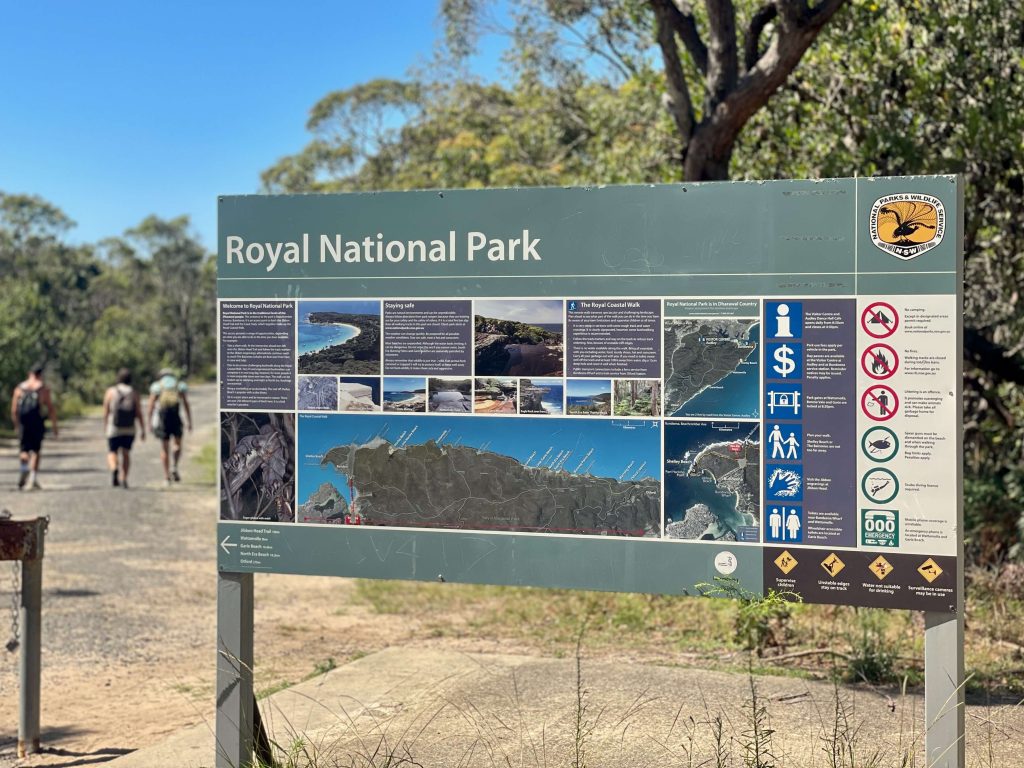
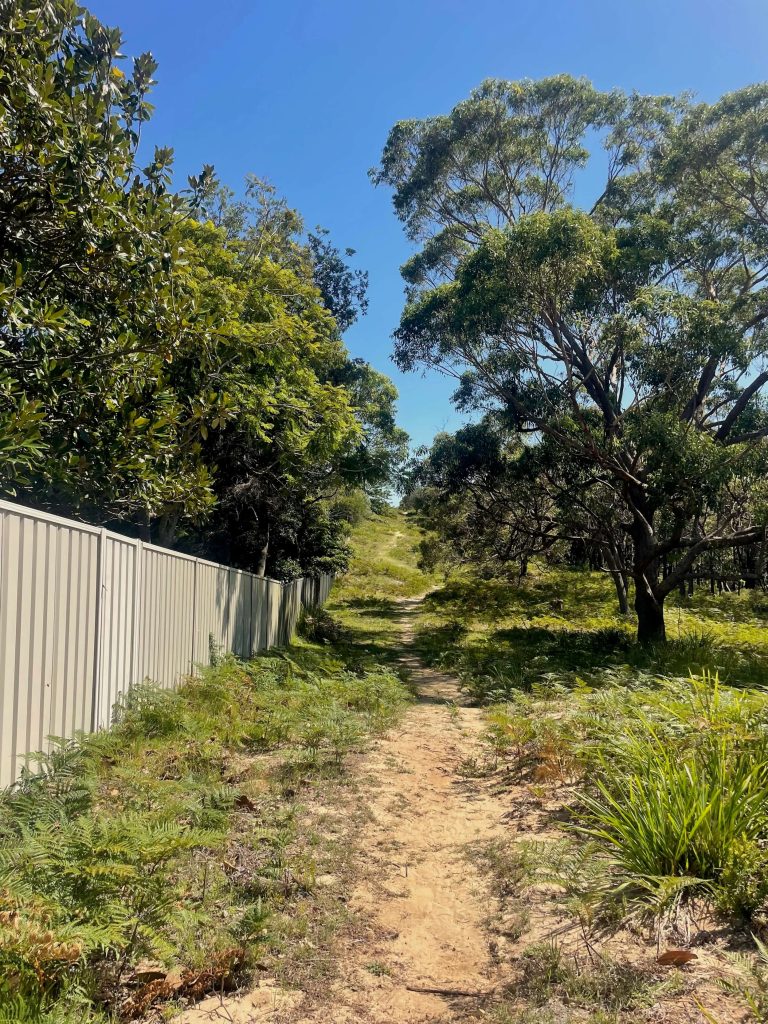
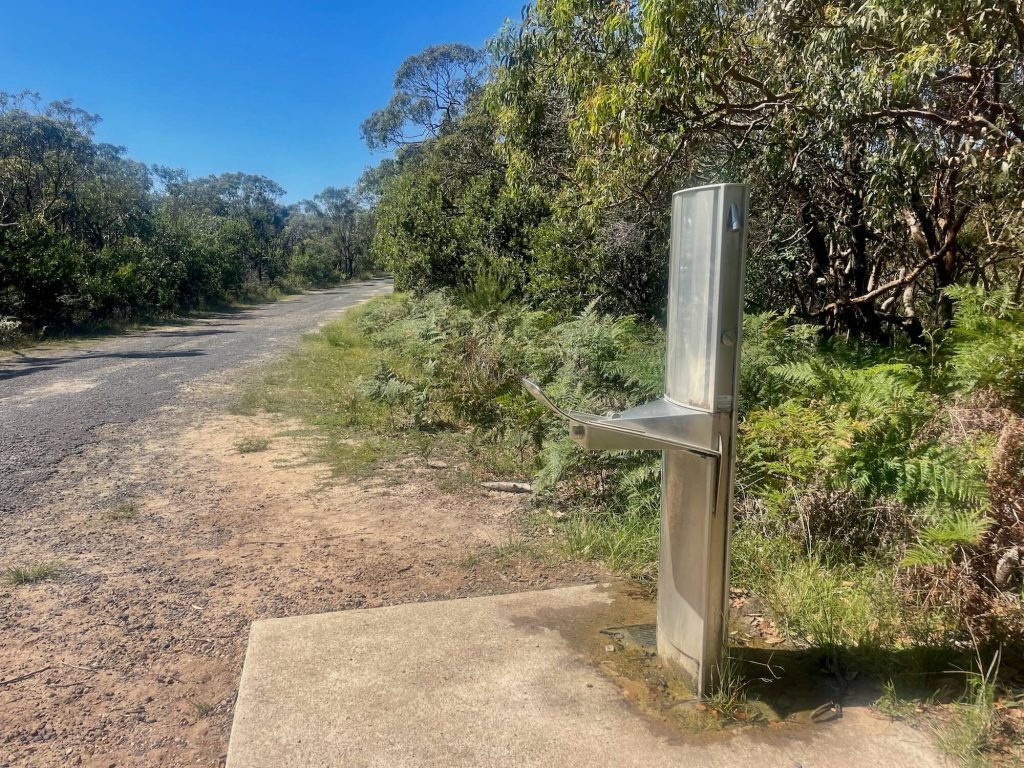
The sandy track meets the road near the start of The Coast Track. Here you’ll find a toilet block, drinking water fountain, and Royal National Park sign. From here you could walk through the streets of Bundeena to head back to the ferry wharf, but the route we take tracks behind the homes on the edge of the bush on a path that runs parallel to Eric St.
Walk until you reach Beryl Langsford Walkway, taking that and then turning right onto Eric and following it around as it becomes Loftus St. Once on Loftus St you’ll continue on until you reach Bundeena Reserve.
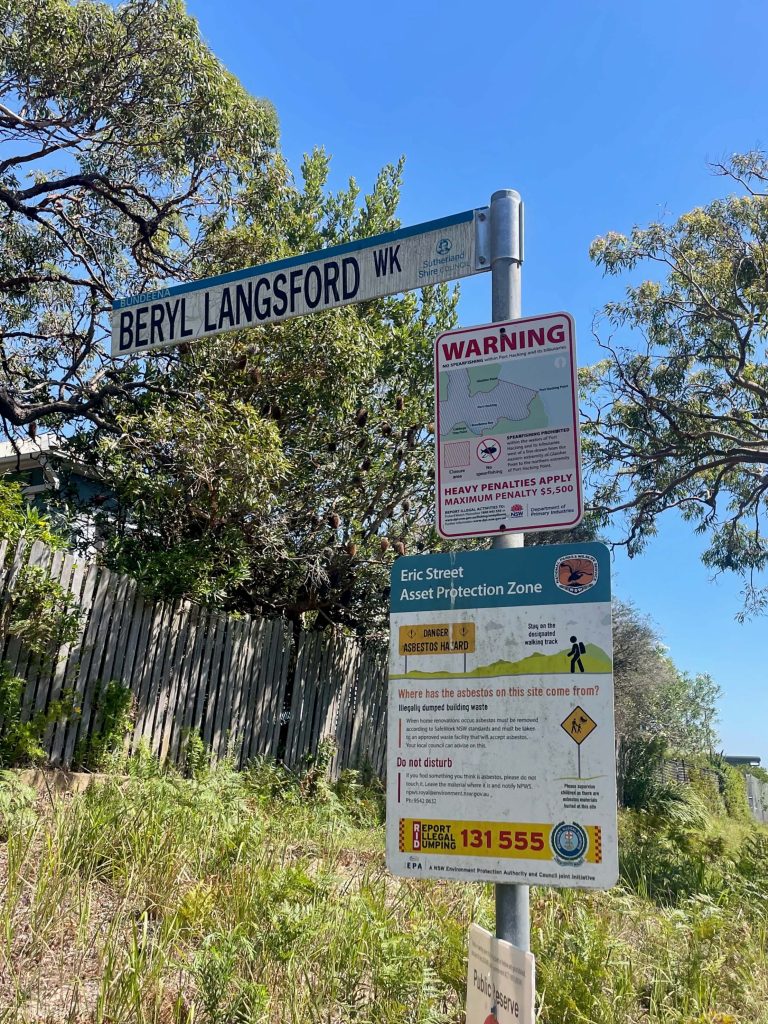
Here you can enjoy Bundeena town, Bundeena Beach, or simply make your way down to the ferry wharf to head back across Port Hacking as you begin your journey home.
Maps & Navigation
This Jibbon Track loop route begins and ends at Bundeena wharf, and includes a short section walking through the streets of Bundeena before making its way across Jibbon Beach and entering Royal National Park.
The section from the wharf to the beach and National Park is relatively straight forward to navigate.
To prepare, you can refer to the embedded map below and add the Jibbon Head and Shelley Beach Loop route to the All Trails app on your phone for a map you can walk with.
Once you enter the National Park, the track is defined and has waymarkers.
Facilities
Cafes & shops
While the Jibbon Track is a loop walk through a section of Royal National Park, you’ll start and finish at Bundeena where there are shops and cafes.
You’ll find several cafes on Brighton Street, the Bundeena Community & Services Club on Loftus Street, and there’s an IGA for groceries on Loftus Street too.
Drinking water
Drinking water is available at a couple of locations close to the Jibbon Track in Bundeena:
Toilets
When walking the Jibbon Track, you’ll find toilets at the following locations:
Jibbon Track Highlights
Highlights of walking the Jibbon Track through Royal National Park include Jibbon Beach, Port Hacking Point, the Jibbon Engravings, and the ferry ride across Port Hacking.
Ferry between Cronulla and Bundeena
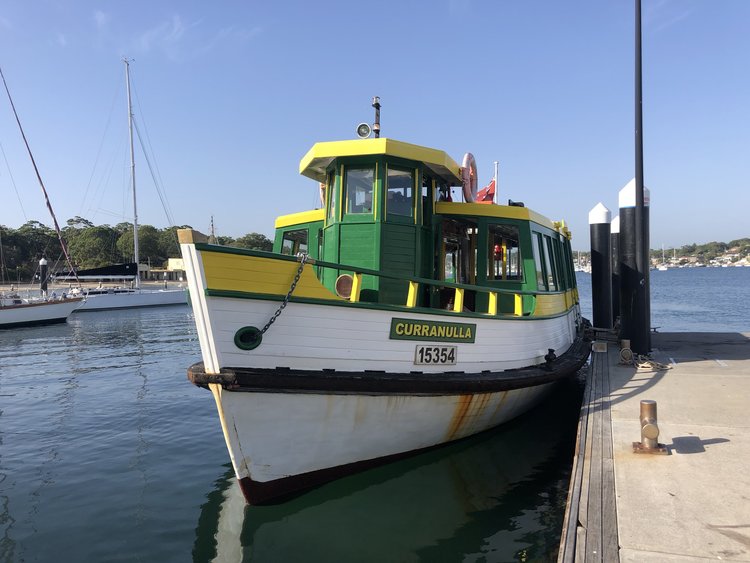
Why drive when you can take the ferry to your walk in Royal National Park? The Curranulla has been ferrying people across Port Hacking between Cronulla and Bundeena since 1939.
Catch the hourly ferry service aboard oldest commuter ferry operating to a timetable in Australia
Jibbon Beach
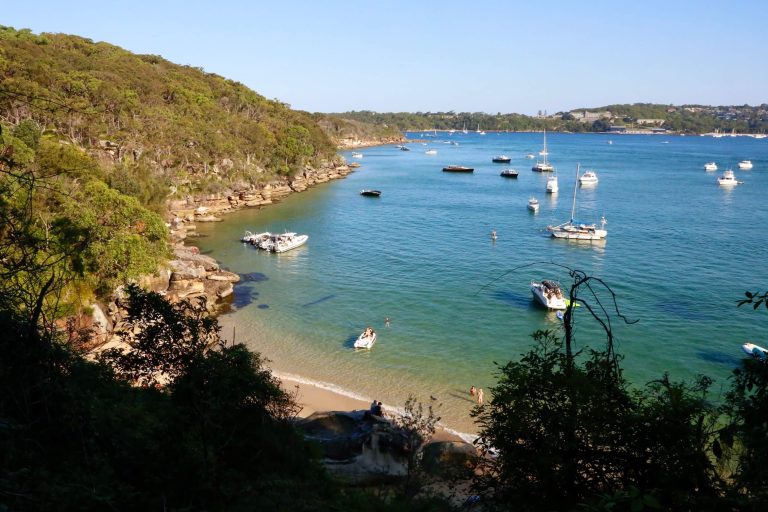
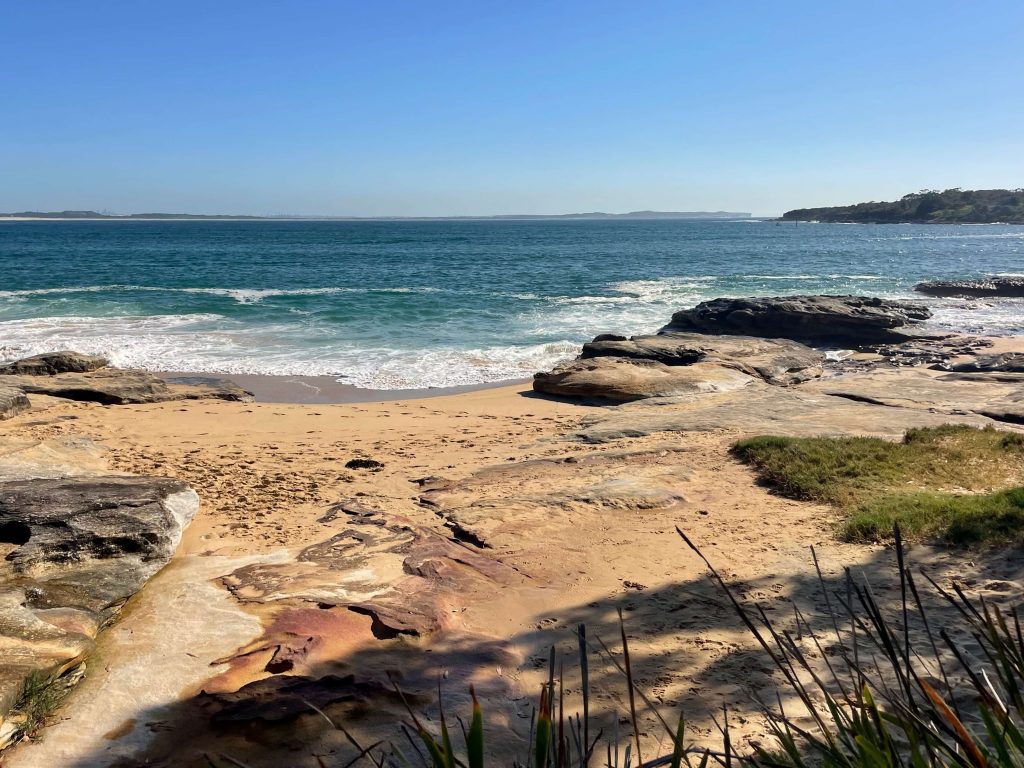
Jibbon Beach is a beautiful stretch of sand along the northern edge of Royal National Park, easily accessible from Bundeena.
Jibbon Engravings
The Jibbon Engravings are an Aboriginal cultural site home to a series of rock engravings. Created by the Dharawal people, the engravings include a stingray and a kangaroo. A raised boardwalk provides a viewing platform that also serves to protect the engravings.
Port Hacking Point
Point Hacking Point provides a view of where Port Hacking meets the ocean. As you round the point on the escarpment, you’ll see the waves crash against the rocks below. If you’re walking during whale migration season, keep an eye on the ocean and you might catch a glimpse of a whale as it passes by on its journey along Australia’s east coast.