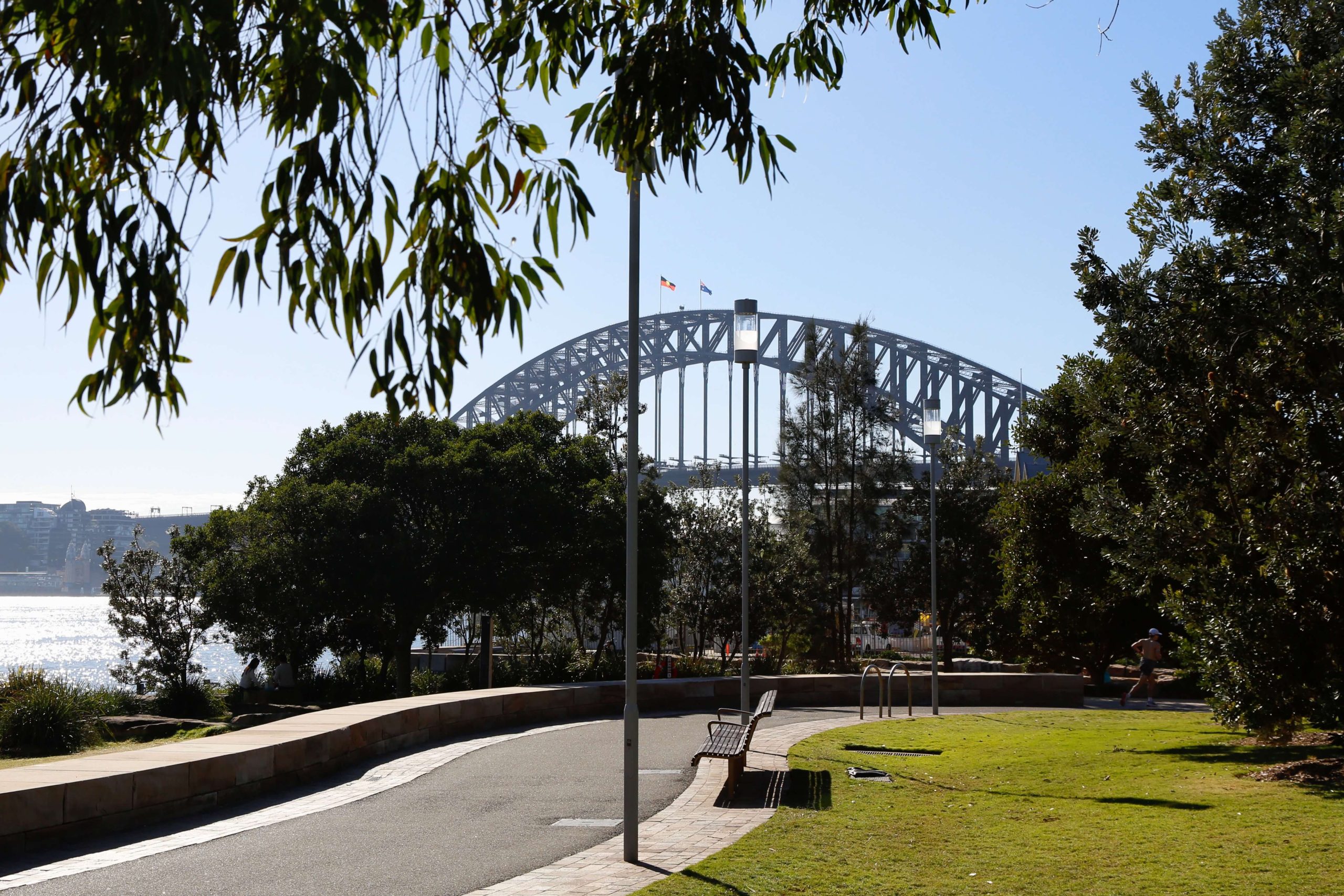
For more than a century, the headland now known as Barangaroo was closed to the public. Today, the precinct is frequented by locals and tourists alike enjoying the popular foreshore park with its sweeping views of Sydney Harbour.
The Wulugul Walk is a 1.4km foreshore pathway along the length of Barangaroo from the bars and restaurants to the parkland reserve.
In this guide you’ll learn everything you need to know about the Wulugul Walk and glean insights into the fascinating history of Barangaroo.
| Distance: | 1.4km |
| Start: | Barangaroo Ferry Wharf |
| End: | Marrinawi Cove |
| Public Transport: | Ferry and metro at Barangaroo Train at Wynyard |
| Water: | Near the Barangaroo Ferry Wharf On the Stargazer Lawn Various points alongside the Wulugul Walk path |
| Toilets: | Exchange Place (near Barangaroo Wharf) Hickson Park The Cutaway Pumphouse (near Marrinawi Cove) |
| Top Tip: | Pack lunch or pick up some takeaway at Barangaroo South to enjoy while overlooking the harbour. |
History of Barangaroo
Barangaroo is on the lands of the Gadigal people of the Eora National. The name ‘Barangaroo’ comes from a highly-respected Cammeraygal fisherwoman.
“Barangaroo was a key figure in the local Aboriginal community at the time of European colonisation. Her legacy lives on in the cultural significance of Barangaroo the place.”
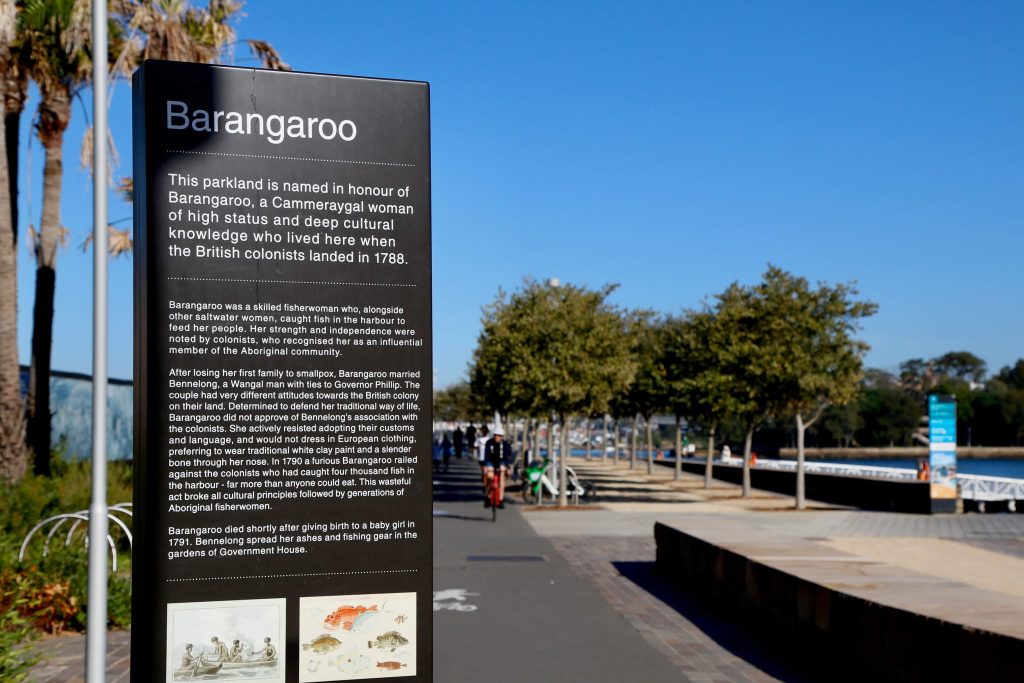
Before European settlement, First Nations people came together around the foreshore and fished in the harbour. In the 1800s, the waterfront at Millers Point was industrialised for the maritime trade and became a working port.
The arrival of the Bubonic Plague in Sydney in 1900 once more transformed the waterfront. The plague arrived in Sydney through infected rats aboard ships docking at the harbour port.
As part of disease control efforts, the NSW Government took over the land at the port, demolishing sections, and an era of redevelopment began. By the 1960s, a functional yet deeply uninspired concrete slab hosted a container terminal that occupied much of the foreshore near Millers Point.
In 2003, the state government announced a vision for the future of that place that was to become known as Barangaroo: revitalising the foreshore and reopening it to the public.
Today, Barangaroo is a waterfront precinct home to foreshore parkland, restaurants and bars, a luxury hotel and casino, commercial offices, ferry wharves, a metro station, events’ spaces, and a harbourside walk that traces the length of the precinct connecting with Darling Harbour at one end, and Walsh Bay at the other.
Barangaroo Foreshore Walk Overview
The Wulugul Walk is a pedestrian pathway that follows the length of the foreshore from near the ferry wharves at Barangaroo South past Nawi Cove and around Barangaroo Reserve.
Starting from the Barangaroo Wharf and ending at Marrinawi Cove near Towns Place, the walk is around 1.4km. You can make your Barangaroo foreshore walk an out-and-back loop of sorts, returning via the Walumil and Stargazer Lawns. This Barangaroo walking route is approximately 2.6km, starting and ending near the ferry wharves.
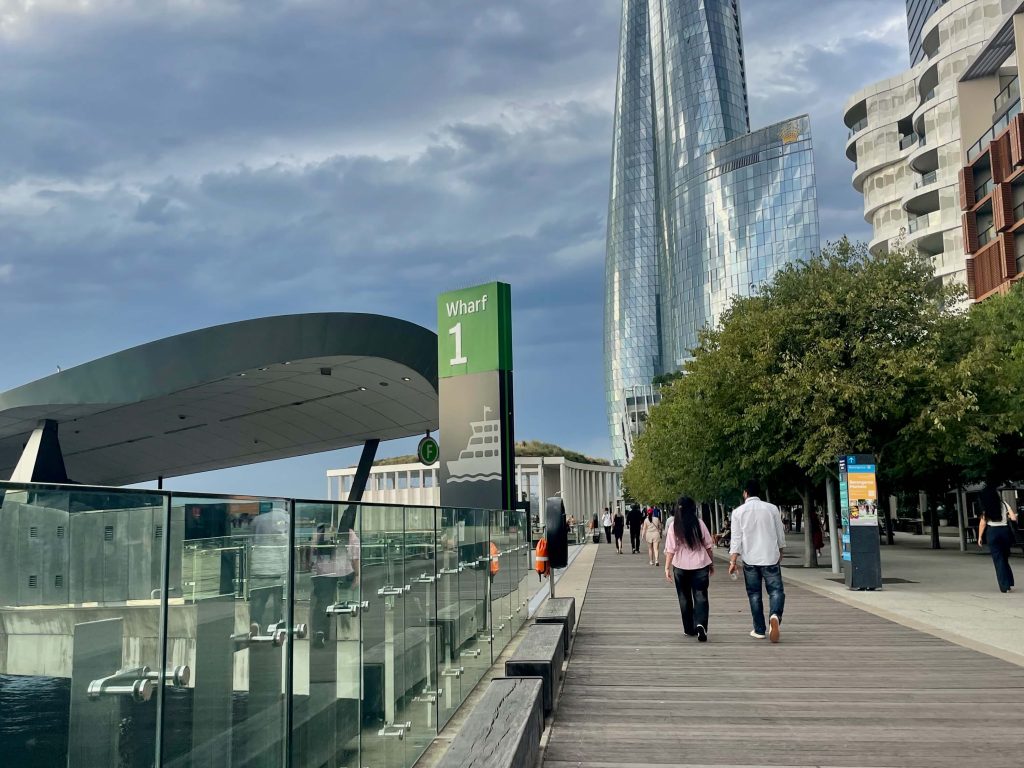
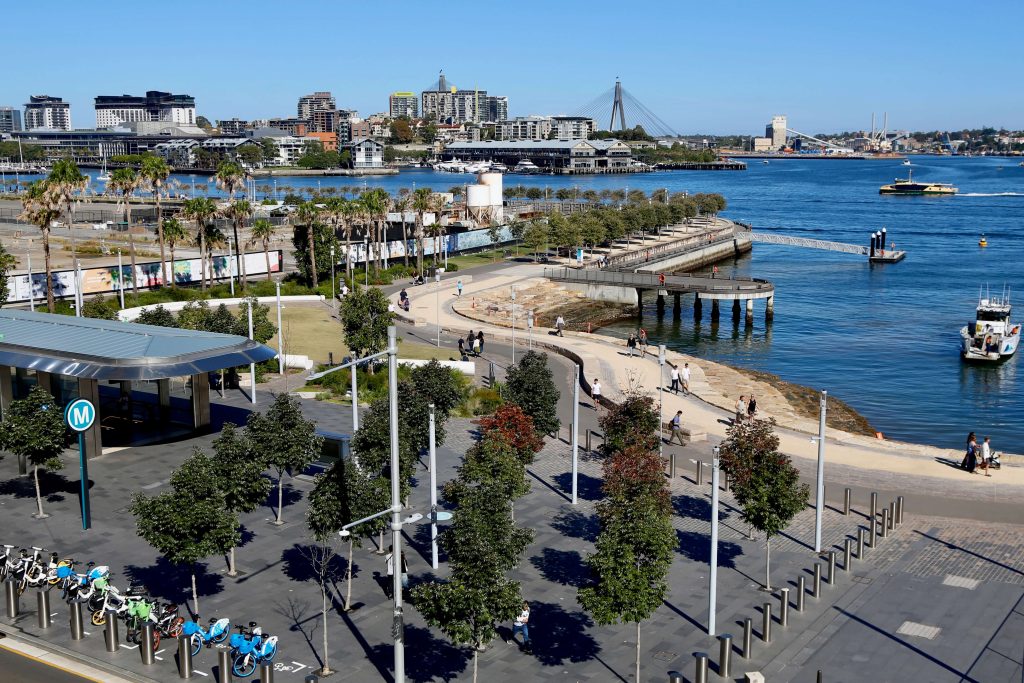
From Barangaroo Wharf, Wulugul Walk heads toward Barangaroo Reserve. You’ll see Pier Pavilion and the towering Crown Sydney ahead of you. Keeping the harbour on your left, you’ll notice restaurants, bars, and cafes of the Barangaroo South precinct on your right.
You’ll pass by the not-yet-complete Barangaroo Central, home to Mov’in Bed outdoor cinema during the summer months, before reaching Nawi Cove which is lined with sandstone blocks stepping down to the harbour’s edge. Fun fact: the sandstone blocks at Barangaroo are made from rock quarried onsite during the development of the park.
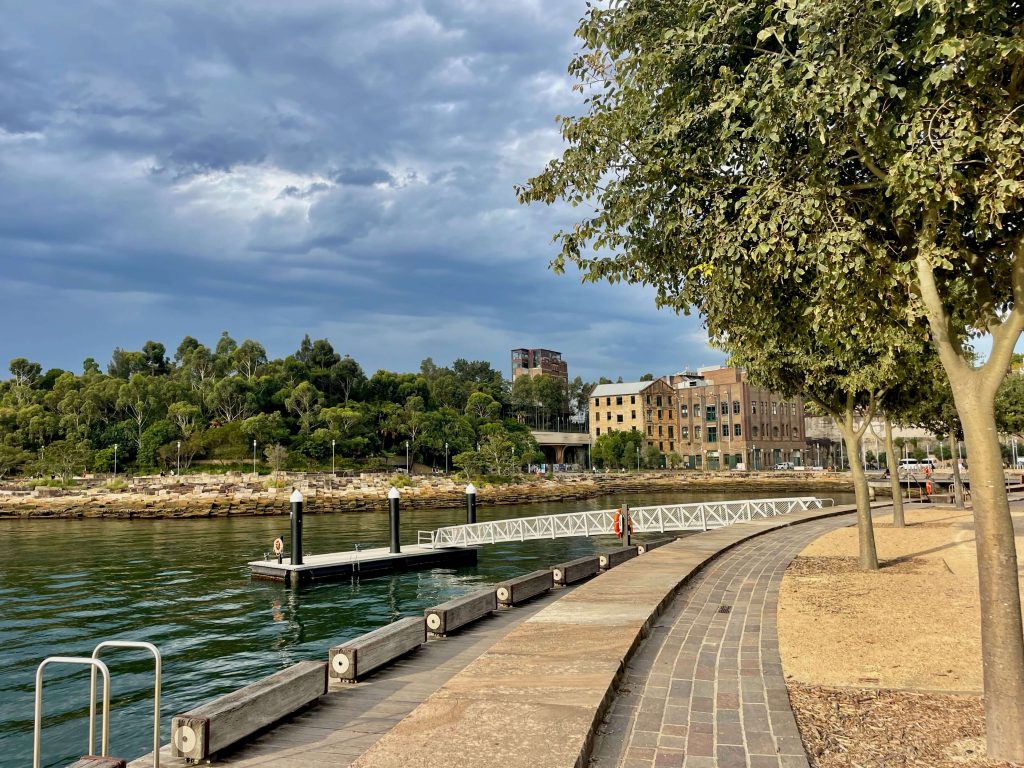
Continuing on, you’ll pass the entrance to The Cutaway and the Girra Girra Steps that lead up to the Stargazer Lawn. Next, on the harbour side of the Wulugul Walk pathway is Nawi Lawn.
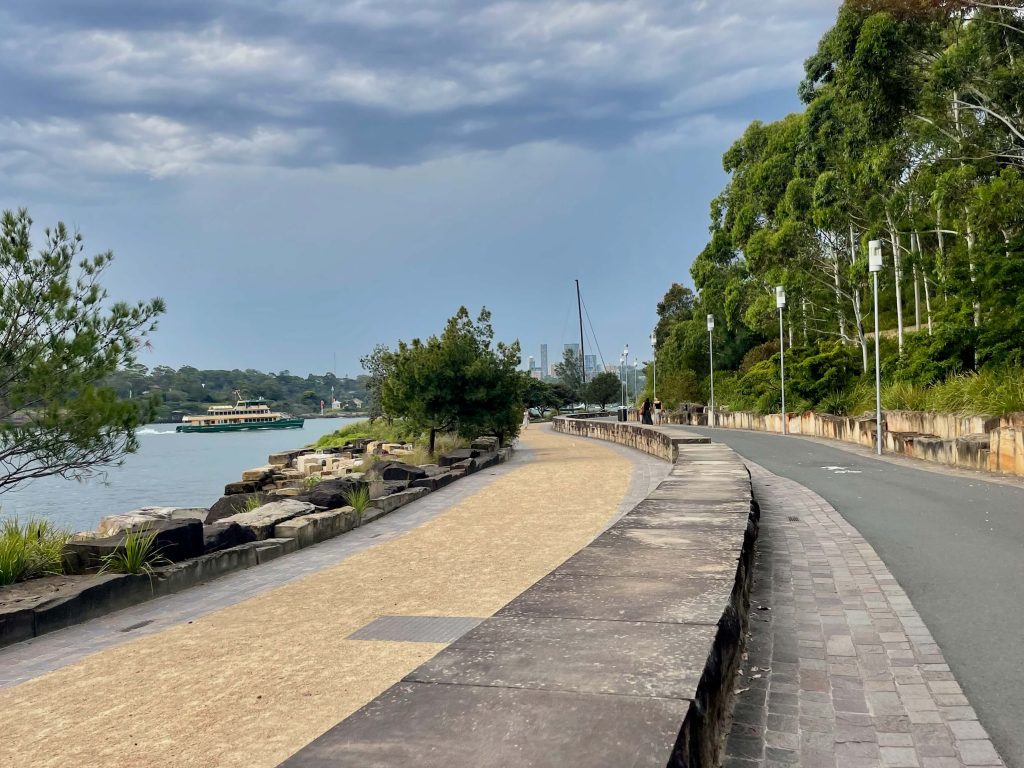
As you inch closer to the end of the headland, the Wulugul Walk veers to the right toward the Sydney Harbour Bridge. Before long you’ll be at Marrinawi Cove with its harbour pool. If the weather allows, you might like to pack swimmers and a towel to enjoy a swim here.
If you’re walking back to where you started, you can vary your route by taking the Baludarri steps (just beyond Marrinawi Cove and before Towns Place) up through the Walumil Lawn and to the Stargazer Lawn.
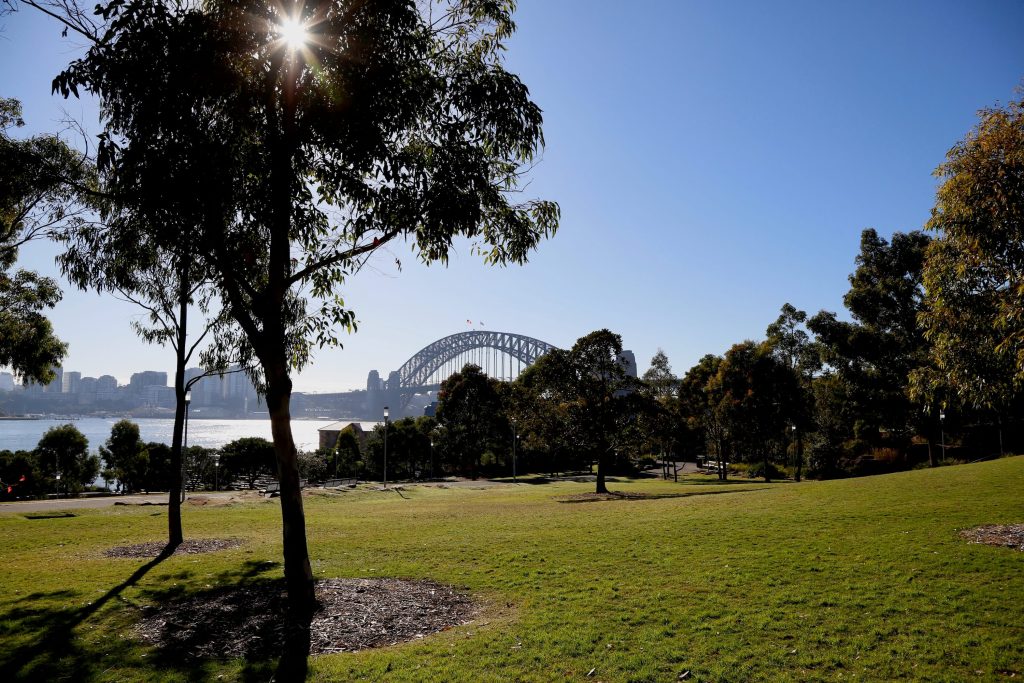
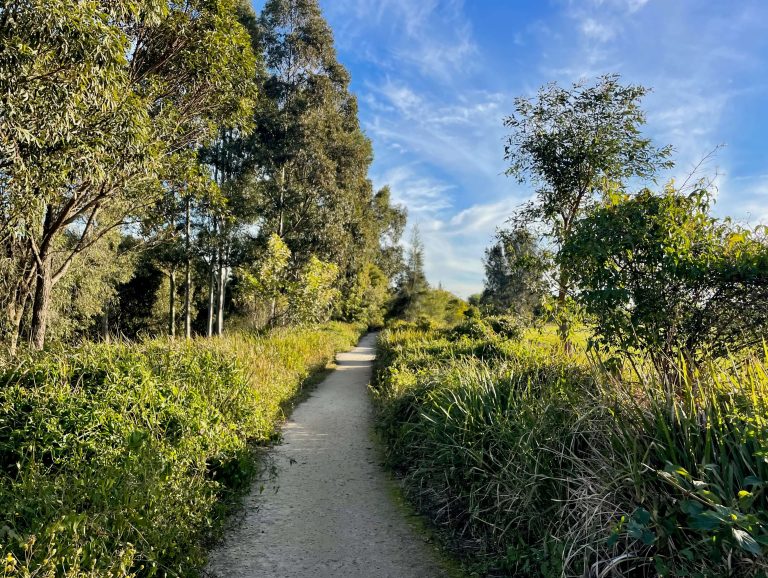
From the lawns you’ll have a vantage point that allows you to enjoy both the harbour and the tens of thousands of native trees and shrubs planted in the creation of Barangaroo Reserve.
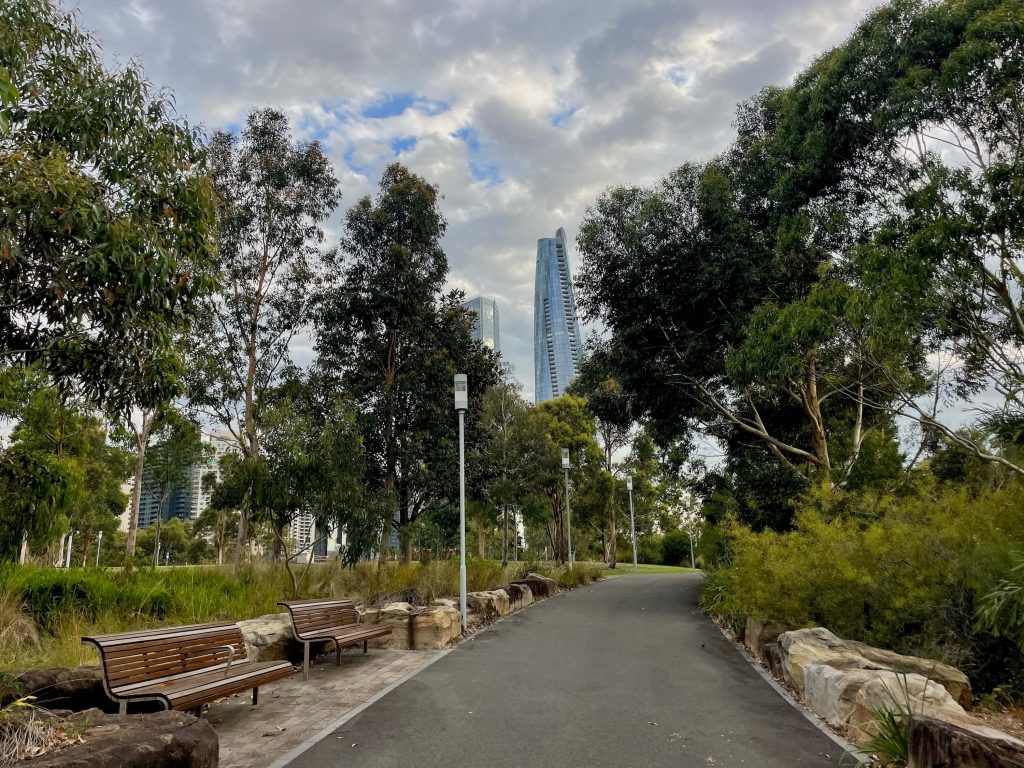
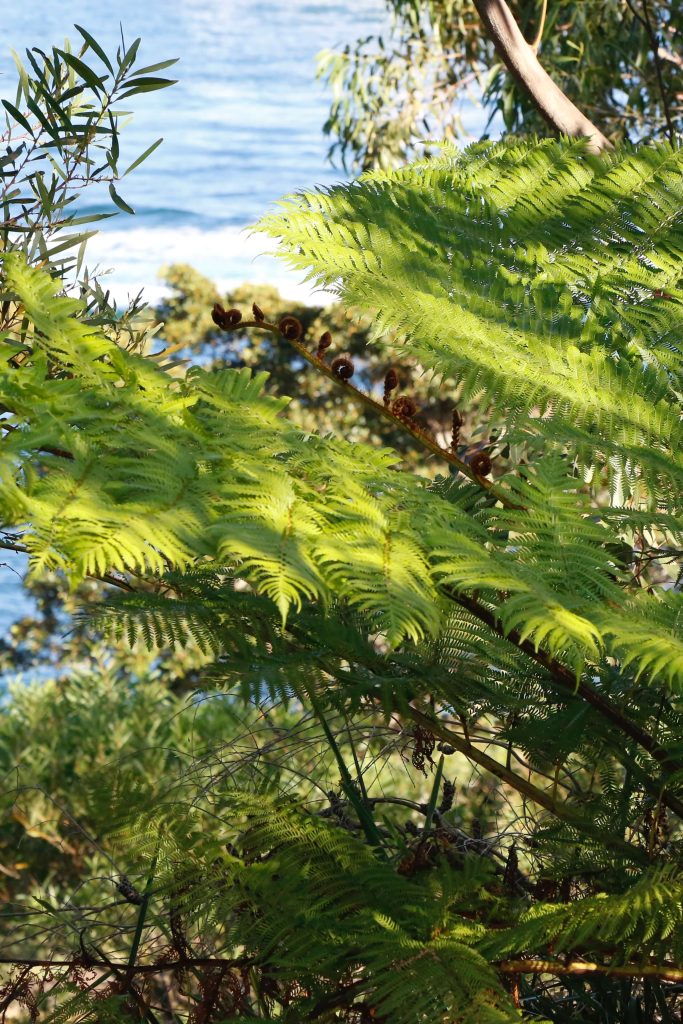
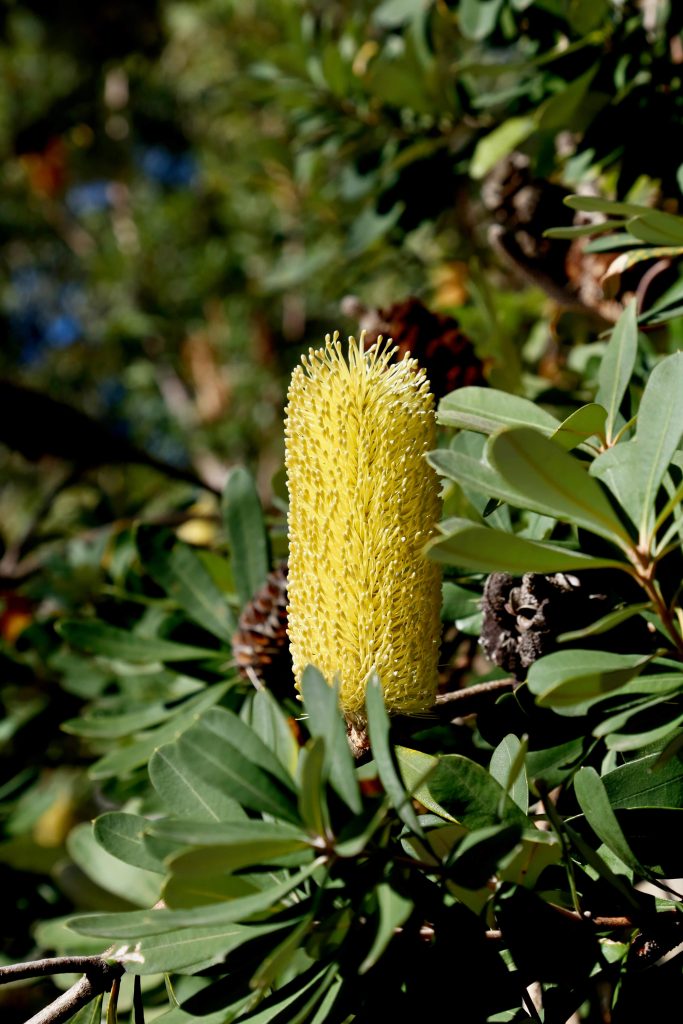
The Wulugul Walk at Barangaroo forms what was previously a missing link in a now 11km pedestrian pathway along the harbour foreshore from Woolloomooloo to the Anzac Bridge.
Barangaroo Foreshore Walk Map
The Wulugul Walk follows the foreshore along the length of Barangaroo. It’s easy to find and follow, and there are signs marking the walk and the various points of interest along the way.
How to get to Barangaroo
Located on Sydney Harbour between Walsh Bay and Darling Harbour, Barangaroo is easily accessible whether you’re walking from Sydney CBD, driving into the city, or visiting via public transport.
Public transport
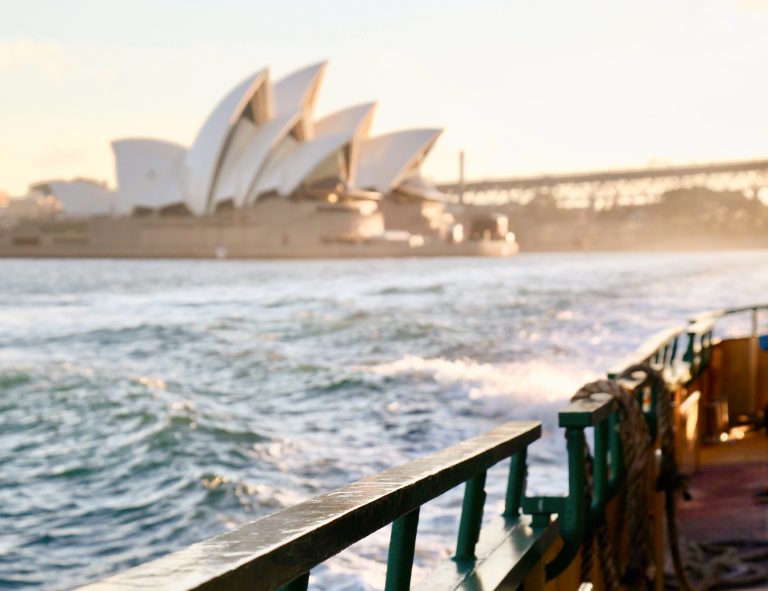
Barangaroo is well served by public transport with a Metro station, ferry wharf, nearby bus stops, and is a short walk from Wynyard train station.
Your main options for travelling to Barangaroo via public transport:
- Take the ferry to Barangaroo ferry wharf
- Take the metro to Barangaroo metro station
- Take the train to Wynyard and walk 5 minutes to Barangaroo via Wynyard Walk
- Take a bus to Hickson Road or Towns Place (Barangaroo Reserve end) or to CBD stops on Sussex St or Kent St (Barangaroo South end near King Street Wharf)
You can plan your trip using the Transport for NSW Trip Planner.
Walking
Barangaroo is within walking distance of central Sydney, Darling Harbour, and Circular Quay. An interesting walking route to take is from Circular Quay to Barangaroo, via the Argyle Cut.
Opened in 1859, the Argyle Cut — built by convict labour and completed by Council (whose explosives proved a hardier match for cutting through the thick rock) — links the historic neighbourhoods of The Rocks and Millers Point.
The walk from Circular Quay to Barangaroo Reserve is about 1km.
Driving
If you’re planning to drive to Barangaroo, there is an underground car park located beneath Barangaroo Reserve. The car park is operated by Wilson and is accessible from Towns Place. It is open from 6am until midnight daily. You can prepay online via the Wilson website.
Facilities at Barangaroo
Cafes & Restaurants
The Barangaroo South precinct, close to the ferry wharves, is home to waterfront restaurants and bars, with plenty of options ranging from fine dining to casual eats and takeaway spots.
If you’re planning to do the Wulugul Walk, you might like to start or end your walk with lunch at one of the restaurants, or you could pick up some takeaway to enjoy on the lawns alongside the harbour. Takeaway options at Barangaroo include Grill’d Burgers, Belles Hot Chicken, Bourke Street Bakery, and Yo-Chi.
Drinking water
Drinking water fountains are located in various places throughout the Barangaroo precinct, including:
- Near the Barangaroo Ferry Wharf
- On the Stargazer Lawn
- Various points alongside the Wulugul Walk path
Toilets
Public toilets are located in various locations at Barangaroo, including:
- Exchange Place (near Barangaroo Wharf)
- Hickson Park
- The Cutaway
- Pumphouse (near Marrinawi Cove)
Barangaroo Highlights
There is a lot to enjoy at Barangaroo. As you make your walk along the Wulugul Walk, you’ll come across various points of interest including Pier Pavilion, the Walumil and Stargazer lawns, and Marrinawi Cove.
Pier Pavilion
“…a bold and beautiful public space designed to bring people together on the edge of Sydney Harbour.”
As you leave the ferry wharves behind, one of the first points of interest that will catch your eye is the beautiful Pier Pavilion. Located on the waterfront at Watermans Cove, Pier Pavilion is a communal public space providing a view across the harbour. It can also host events.
A nod to its place on the waterline, Pier Pavilion features in its construction materials what its designers, Besley & Spresser, call ‘oyster terrazzo’, made in part from 450,000 recycled Sydney rock oysters. And in a special treat for passing birds, and occupants of adjacent skyscrapers, the rooftop is landscaped with native plants.
Walumil & Stargazer Lawns
Barangaroo Reserve opened in 2015, and with it, the dedication of public green space on the western edge of Sydney CBD.
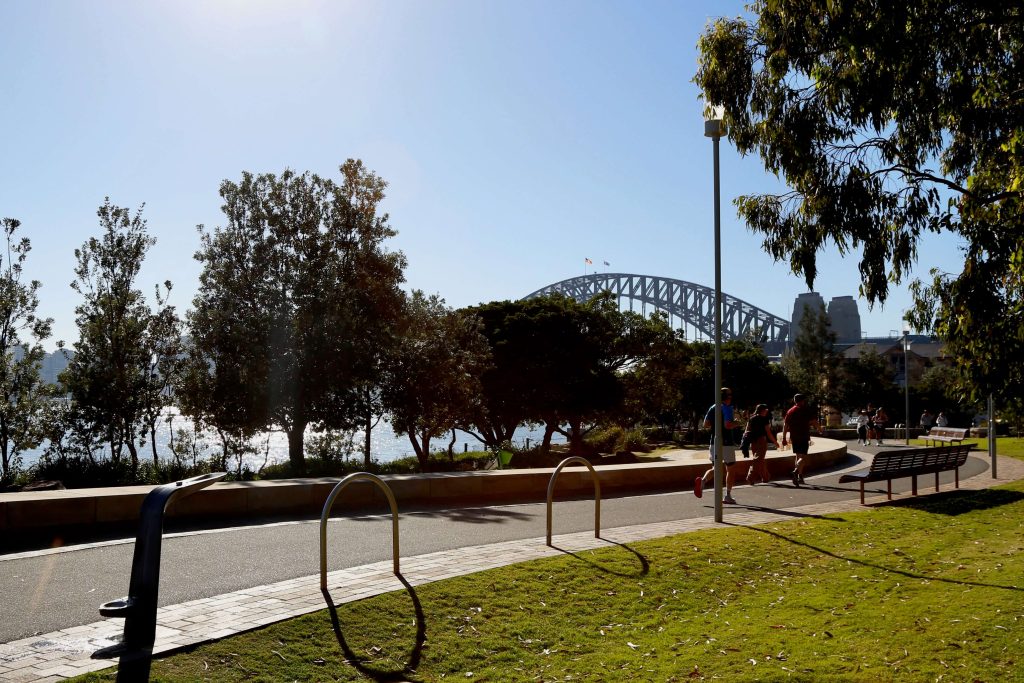
The sprawling green lawns at Barangaroo offer sweeping views across the harbour, toward the iconic Sydney Harbour Bridge, Me-Mel (Goat Island), and some of the inner harbour headlands.
From the lawns you can watch as the ferries make their way around the harbour, and you can enjoy the shade of the native trees planted in an effort to recreate the pre-settlement headland landscape.
If you’ve packed a picnic, you can’t go wrong enjoying it from a spot on the lawns of Barangaroo Reserve.
Marrinawi Cove
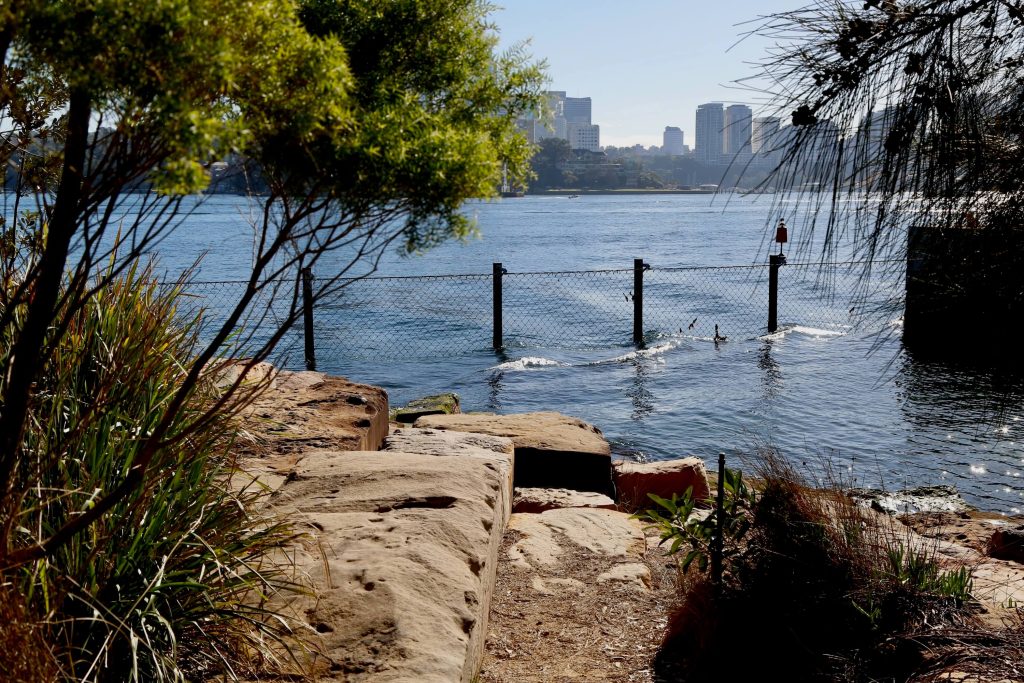
Fancy a swim during your visit to Barangaroo? Don’t miss Marrinawi Cove. The netted harbour pool provides a sanctioned place to swim in Sydney Harbour, much of which is off-limits for functional reasons like boat traffic; and ill-advised elsewhere for risk reduction reasons like… sharks 🦈
- Toilet and shower facilities are located in the former Pump House at Marrinawi Cove
- Lifeguards do not patrol the swimming area at Marrinawi Cove
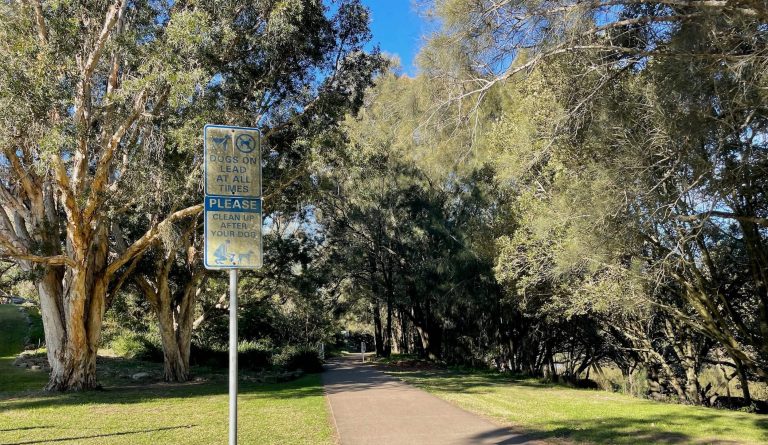
- Dogs are allowed to swim at Marrinawi Cove, but must be leashed in Barangaroo Reserve
- There is a shark net in place at Marrinawi Cove

One Comment